Lost Texts

My grandmother wrote a poem once that was published in her high school yearbook. I remember reading it with her when I was young–from a hard bound volume with old fashioned script embossed on the cover (it would have been published around 1930). As I recall, the poem was about the changing of the seasons–winter to spring. And my grandmother’s name appeared alongside it–her maiden name which was strange to see in print.

She was as proud of writing the poem as she was of having studied Latin. I studied Latin in high school to be like her, and there was one year that I failed to capture the Latin award at my school’s honor ceremony. The next day I told her about the other awards I’d won, Chemistry, Creative Writing, top student in my class, and then my grandmother asked, “What about the Latin award?”

Unlike the Romans whose texts I studied in high school, this summer at the Louvre I learned about the Phoenicians, who were instrumental the development of the alphabet, but whose writings we have barely any record of because their papyrus manuscripts did not survive the perils of time.

This summer I also read Virginia Woolf’s essay “A Room of One’s Own” about the historical plight of women writers and women who might have been writers if circumstances had allowed them. The essay ends with Woolf encouraging modern women writers to write for the women who came before them who did not have the opportunity so that these women could live on in them.

My grandmother wrote her poem within a few years of the 1929 publication of Woolf’s essay. I’m not sure if my grandmother wrote any more poems after the one that was published in the yearbook. Or how many she wrote before. I don’t know when she might have started writing or when she stopped. If she had any other poems or manuscripts, my guess is they’ve gone the way of Phoenician papyrus.

Which is too bad because I would have liked to have read more of her writing. Or what she would have written if circumstances allowed.

Tearjerkers

For the past few years, I’ve had two default options I could turn to when I wanted to cry: (1) watching Sarah McLachlan’s ASPCA commercial about animal cruelty and (2) thinking about the plot to Liane Moriarty’s novel What Alice Forgot. (After suffering a head injury, Alice can’t remember the past decade of her life or how she and her husband, who she’s in love with, have come to be on the brink of divorce.)

This week I came across a third thing that brought me to tears–upon reading it and in trying to describe it later to David. It was a set of guidelines for socially isolated older adults looking to increase enjoyment at mealtimes. It included tips like starting an eating club, dining by a window, and giving a table a special touch by adding a decorative vase.

The guidelines struck me in a few places. First, in my grief for others–the many seniors out there in the world whose loneliness seemed palpable to me in the moment. And then again in memories of my own college lunches–when I’d buy food at the campus center and take it back to my house to eat alone. There were many groups dining on campus–lots of people I knew–but they seemed to belong to each other and not to me.

I also ate breakfast alone in college. I did this at the campus center. A fraternity guy who was in some of my economics classes was often there at the same time eating by himself. I enjoyed watching him discretely because he was handsome in a cartoonish way with big eyes and a broad mouth. We ate nearby each other many times but I never spoke to him–in the cafeteria or in class.

The third place the mealtime advice for older adults struck me was the present. In the longing I feel for close friendships (beyond my marriage). I’ve made some progress since college, but establishing friendships and feeling a sense of belonging are still things I struggle with. And things I hope to improve. Because I enjoy being alone but I want to stave off loneliness–especially as I age.

Conditional Bucket List Items

The thought of visiting a major museum in its entirety had occurred to me before I undertook the challenge at the Louvre. But I’d never considered it a bucket list item because I didn’t have regular access to such a museum. That is, until I spent two months living in Paris this past summer.

Buying the membership was easy. I did it in person–80 euros and I was officially an Amis du Louvre with a membership card and a free plus one on Wednesday and Friday nights (which I used twice to share my findings).

At the start of the summer, I wasn’t even sure if I liked the Louvre. I’m not a fan of large crowds, and I’m also nervous around precious objects. With every visit, I confronted these fears.

And with every visit, I became more comfortable. With the layout. With all the people experiencing the art alongside me. And with the objects–some ancient, some Medieval, some more contemporary but still pretty old (most of the items in the Louvre date before the 1850s).

I started the summer in the Antiquities sections: Near Eastern, Egyptian, Greek, and Roman. I covered Decorative Arts, Islamic Arts, and the Arts of Africa, Asia, Oceania, and the Americas (one of my favorite sections). My last few visits were dedicated to European sculpture and painting–with the Italian painting wing (and the Mona Lisa, the biggest celebrity in the Louvre) coming near the end.

Over the course of ~15 visits (I should have kept track), I came to know the Louvre. I understood the wings–Sully, Denon, and Richelieu. I learned about its long history as a palace in the Medieval Louvre section. And I came to understand that experiencing the Louvre meant experiencing it with others.

I may have started the summer unsure of how I felt about the Louvre, but I ended the summer loving it. Walking around the museum’s corridors examining 16th century tapestries in wonder–discovering the history of the world with people from all parts of the world alongside me.

As a conditional item (conditional on proximity to a major museum), visiting all the departments in the Louvre was an incredible undertaking to check off my bucket list. And it’s inspired more bucket list items for me. The funerary art I saw at the Louvre–the mummies and coffins and gravestones–have made me eager to visit museums and ancient burial sites in Italy, Greece, and Egypt.

It’s also made me think about what other items I should put on my bucket list given my current conditions–living the Southeastern US. I haven’t visited Savannah or Charleston or any major Civil War sights. I’ve been to the King Center in Atlanta but there’s a lot more I’d like to see connected to the Civil Rights movement.

Learning to love the Louvre has renewed my love for learning, and I’m excited to keep adding items to my bucket list and hopefully checking them off.

Giving Up the Good

About a year and a half ago I sensed it was time to make some changes. Things weren’t in a bad way. I was happy with what I was doing–devoting my time to comedy and other creative pursuits. But I wanted a new challenge. A new area to uncover. A new skill to learn.

This yearning for something new was constrained by what was old. Most of my time and intellectual energy were already spoken for. Taking on something new meant making cuts to activities I enjoyed doing. Giving up places and positions where I felt comfortable.

“Don’t be afraid to give up the good to go for the great.” -John D. Rockefeller

I came across this quote from Rockefeller in a productivity journal I was using at the time. Looking at my situation from this perspective made me more willing to change–to cut back on what I was doing so I could try something new.

I started another productivity journal recently and came across the same quote. Seeing it again satisfied me because since I first saw it I’ve learned a new skill (personal training) and started a new job I’m enjoying.

I do miss what was good, but I’m grateful to have had the courage to pursue the great.

My Favorite Parks are Cemeteries

I was on my fourth or fifth visit to Père Lachaise Cemetery in Paris when I overheard another American tourist, a young woman in her twenties, make this statement about the cemetery to her friends:

“I guess it’s a park…if you’re morbid.”

I didn’t know whether to fight her on it or thank her for her observation. Because I’m not sure whether I’m morbid.

The dictionary that pops up on my Google search defines morbid as “characterized by or appealing to an abnormal and unhealthy interest in disturbing and unpleasant subjects, especially death and disease.”

I’m definitely interested in death. I wrote a dissertation about it. And I’ve made no secret about my love of cemeteries. Check out my updated cemetery recommendations page that now includes Père Lachaise!

But I wouldn’t I characterize my interest as unhealthy or abnormal. I think that I think about death a healthy amount. An amount that lets me reflect upon what I want to do with my life and how I will handle change. An amount that lets me better understand the past by studying the lives of the deceased.

My favorite parks are cemeteries. And cemeteries are often the places I am happiest and the most at peace.

On the Occasion of our 8th Anniversary

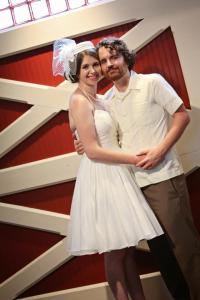
In the year before our wedding, our sixth year together, David and I took dancing lessons. These were weekly private ballroom lessons with the occasional local swing or salsa night thrown in for practice. Our instructor helped us choreograph two dances for our wedding–a fox trot and a hustle. We spun and dipped and generally wowed our wedding guests. And to this day, we’re still able to bust out these moves learned long ago when the occasion calls for it (mainly other people’s weddings).

While we touched on it in our year of dance lessons, we never really learned how to tango–something I came to regret this summer when we found ourselves on the sidelines of tango nights by the Seine in Paris. I’d long associated tango with sexiness but hadn’t appreciated how much so until I witnessed dozens of French people dancing it simultaneously. There’s a closeness to it–the physical proximity between two people–and then there’s a stillness to it–pauses in the music where two dancers are just holding each other.

There was one pair I observed at the Seine who danced together all night. The woman, dressed in a short white dress and heels, clung closely to the man leading her, who was dressed in black pants and a black t-shirt. Through all their dancing, the woman’s eyes remained shut so tight lines formed at the corners. I’m not sure if they were married, but their movements seemed to me to embody marriage. Moving together through a familiar pattern, holding close, leading and following (sometimes blindly)–hoping you’ll be able sustain each other with what’s between you.

I hope David and I will have the opportunity to learn to tango someday (and return to Paris), but I know now is not the time for it. I’ve found there are seasons to our marriage and some are for having new experiences together (traveling through Europe) and some are for cultivating and maintaining what we already have (a house with a yard). Some seasons we are close together working toward a common goal (learning to dance) and others we spend more apart building individual skills (comedy, competitive gaming).

Growth has been a common theme throughout our marriage, and I’m proud of the ways that we’ve grown and changed together over these past eight years. And I’m excited for what’s to come.

310139_2429243413056_291203455_n297687_2429244293078_1146350775_n

Riding the Waves of Popularity

We stood in a line in the street waiting to order crepes for about twenty minutes while the neighboring crepe maker watched us from his vacant window. David had warned me about this aspect of his favorite crepe shop–that there was a less popular one right by it. But knowing it in advance didn’t make the situation easier for me. I still felt a great deal of sympathy for the lonely crepe maker, which made the delicious crepe we eventually ate slightly less delicious.

I’ve had a deep respect for popularity ever since I became aware of its existence around fifth grade. Over the course of my life, I’ve found myself both high and low on the ladder, and while I’m generally more comfortable at the bottom and have found lasting friendships there, I like the magnetism I feel when I’m on top–the way people seem attracted to me.

I’ve been to a number of museums this summer, and at them, I read a lot of signs because I’m a fan of information. I’ve found myself particularly attracted to stories of artists and political figures who traverse both the fringes and the heights of popularity during their lives. For example, Winston Churchill, who despite having enjoyed political success in the early 20th century, spent a decade in political isolation before becoming Britain’s prime minister during World War II. This isolated period in Churchill’s life is referred to as his “wilderness years” and during it he sought comfort through painting.

At the Louvre, I’ve learned about artists who encountered criticism and censorship but were ultimately revered (e.g., Delacroix), artists who achieved fame and then fell out of favor during their lifetime (e.g., Gros), and artists who lived their lives in relative obscurity only to be rediscovered and heralded in a later period (e.g., Vermeer).

These stories comfort me because they’re a reminder of how much is out of my control in terms of the reception of my work. This in turn reminds me of a quote from the dancer and choreographer Martha Graham on the responsibility of an artist:

There is a vitality, a life force, an energy, a quickening that is translated through you into action, and because there is only one of you in all of time, this expression is unique. And if you block it, it will never exist through any other medium and it will be lost. The world will not have it. It is not your business to determine how good it is nor how valuable nor how it compares with other expressions. It is your business to keep it yours clearly and directly, to keep the channel open. You do not even have to believe in yourself or your work. You have to keep yourself open and aware to the urges that motivate you. Keep the channel open. … No artist is pleased. [There is] no satisfaction whatever at any time. There is only a queer divine dissatisfaction, a blessed unrest that keeps us marching and makes us more alive than the others.

-Martha Graham*

A friend shared a printed copy of this quote with me last year advising me to put it somewhere I could read it often. I chose my bedroom mirror. It’s good advice for weathering troughs in the waves of popularity and a reminder of the effort needed to reach the crests.

*Source: Wikiquote’s Martha Graham page

All the World’s a Stage…But Where’s Mine?

The closest I’ve come to really liking social media is when I view it as a platform for myself and others to create art, share our stories, promote our work, and be audiences for one another.

This past March I gave up on it because I’d become a bad audience member and a blocked creator. A bad audience member because I felt jealous all the time of what I saw others accomplishing and a blocked creator because I felt pressure to express outrage at what was going on in the world but was scared to share it.

So I retreated. And this retreat coincided with a retreat from the literal stages I’d been performing on as well.

***

My future in theatrical performance is uncertain. I’m not sure what I’ll do next or even what I want. It’s a time of change that feels similar to when I left academia but then I knew I was ready to leave completely. And now I feel like I’m not yet done with performing.

I saw a show this past week in London that confirmed these feelings—The Merry Wives of Windsor at the Globe Theatre. I’d seen As You Like It at the Globe a year before. And it was to my absolute delight (a phrase I don’t use often) that the actor who I’d loved as Jaques in the prior year’s production was playing Falstaff in the show I saw this year. Seeing this actor (Pearce Quigley) on stage and witnessing his ability to send the audience roaring with laughter at seemingly simple moves rekindled everything I love about being on stage (and being a good audience member as well). It was a privilege to see him play once but to have the opportunity to see him twice in two different roles was incredible.

***

We all play parts, and those parts change over the course of our lives (as Jaques details in his “All the world’s a stage” monologue in As You Like It). What’s weird about social media is how much it calls upon us to capture and reflect on the part we’re playing. I see it everywhere I go on my travels—people taking pictures that define them in some way: sexy world traveler in front of a skyline, funny guy next to a nude statue, person with their hand on top of the Louvre pyramid (it’s an angle thing).

It’s not that I don’t want to share myself anymore. It’s more that I’ve become hyper aware of the ways that I’m constructing my part, especially as my identity is shifting. I want to know more about who I am now and what venues make sense for me to share my work before I put myself out there again—both in the world of performance and on social media.

For now, I’ll stick with what’s comfortable. Posting weekly on this website and sharing an image of myself with Shakespeare (of whom I’m a big fan).

IMG-1597

Technical Difficulties

The tour van wouldn’t start for the first twenty minutes of our D-Day tour. A technical malfunction of a small piece of equipment had caused it to lock up.

This gave me time to try to use one bathroom and finding it unsatisfactory to search out another and return back to the van in plenty of time.

Later during the tour, when we talked about the obstacles the Allied D-Day forces faced, the guide would humorously point out that they had encountered difficulties like we had that morning with the van.

Our problems were so small in comparison.

Today I have a technical trouble to report too. I’d hoped to share a couple of new photo albums. But slow upload times and a busy day ahead mean these will have to wait.

In the meantime, here’s a picture of me taking pictures during our D-Day tour. I was having some troubles with my camera (again so small in comparison to the events of D-Day but a problem that weighed on me nonetheless) which may explain my scrunched up face. Or perhaps that’s how I look when I photograph things.

IMG-0508

A Cough From Above

A cough. It’s become a trigger for me on my travels. I hear one, and I move to avert it.

I was in Clermont-Ferrand, France a couple weeks ago when I heard a loud, man sounding cough–the kind designed to clear phlegm from the lungs. I scanned right and left trying to place it.

Eventually I discovered the source–above me–a man on the boundary of middle and older age with his head out the window of a second story apartment (first story in Europe).

We locked eyes, and he nudged his neck toward me as if to say, “Yeah, I’m coughing at you. What are you going to do about it?”

I grimaced and made quick steps down the hill away from him.

A couple days later I woke with my own summer cold–a sore throat and phlegm lodged deep in my chest cavity where it remained for a day or two before I was able to start hacking it out.

Whether my sickness came from the cough from above or another of the many open mouth coughers I’ve tried to avoid on my travels, whose to say.

All I know is that having been coughed upon, I became a cougher. And so it goes.