Ways I’m like my mom: love of the outdoors

My mom loves camping. We went a lot when I was growing up, mainly to places in Ohio where we would tent camp near our car. I remember being in awe of my mom’s ability to pitch a tent, start a campfire, and make delicious meals on a two burner propane stove.

Although we haven’t gone camping together in years, we have had the good fortune of visiting some of America’s most beautiful national parks recently including Grand Canyon, Yellowstone, Yosemite, and the Great Smoky Mountains. Last autumn, we visited Gatlinburg and took a short but steep hike to the top of Clingmans Dome. The views were gorgeous. While we were there, we also hiked a small section of the Appalachian Trail.

My mom really wants to take a backpacking trip along the Appalachian Trail in the Shenandoah Valley region. I’ve never gone backpacking. The prospect scares me, but I hope I’m with her when she realizes this dream.

IMG_3824

IMG_3822

IMG_3798

Ways I’m like my mom: plant photography

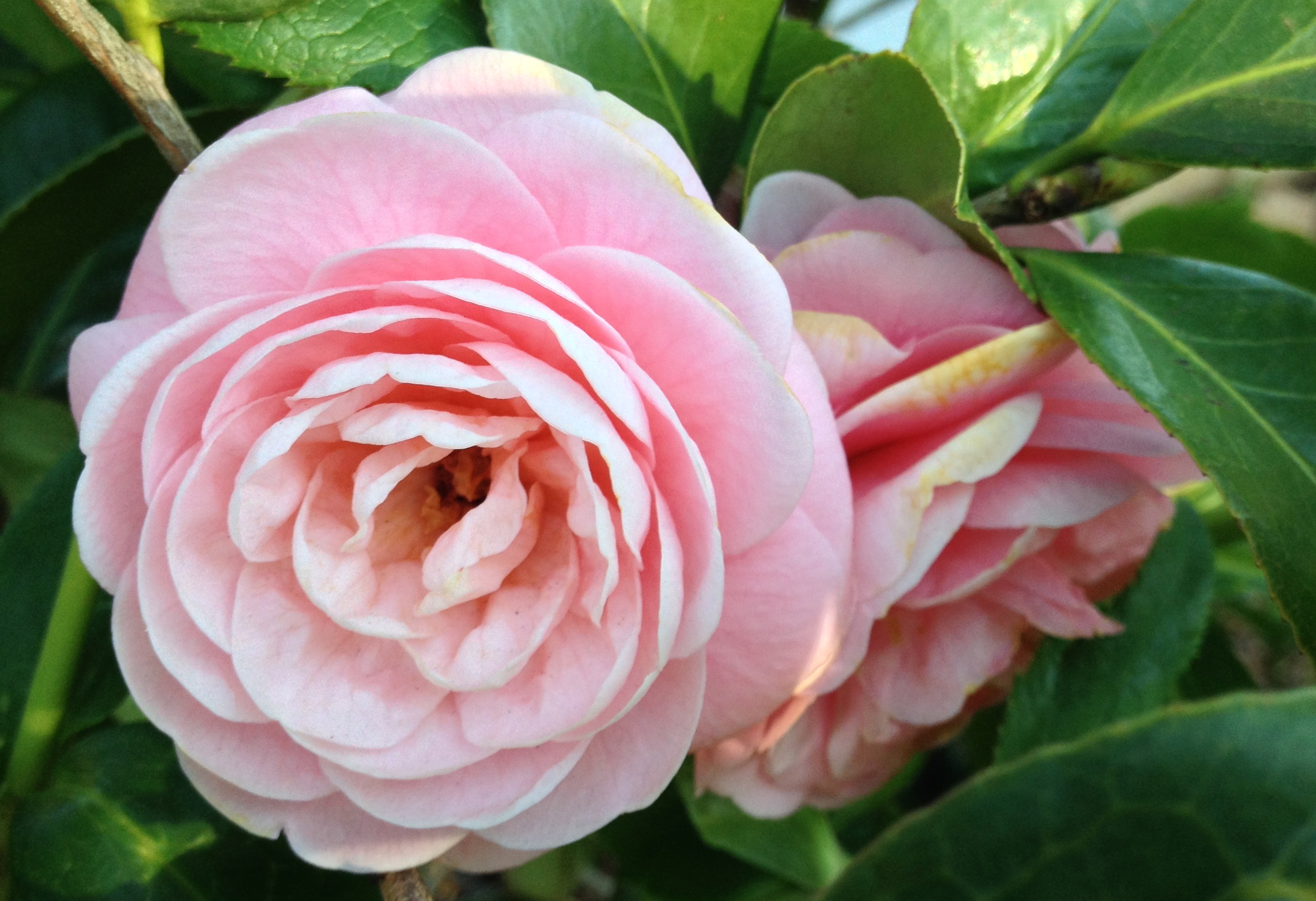
When I was a kid, my mom would often ask me to move out of frame when she was taking pictures of plants. I resented this as I did pretty much all forms of evidence indicating I was not the center of her universe, including my little sister. Now, I understand her impulse. I love capturing the beauty of flowers in photographs.

Here’s a few I took on a recent trip to Oakland Cemetery when my sister was visiting Atlanta. Note that I failed to take any pictures of her during this outing. It’s not because I’m still bitter about having to share my mother’s love. I swear.

IMG_4370

IMG_4409

IMG_4402

Dealing with disappointment

Leaving academia has brought me a great deal of relief but also a hefty dose of disappointment. I’m feeling it this week as my friends and former colleagues attend the Population Association of America 2014 Annual Meeting in Boston.  I attended my first PAA in 2005 soon after I started graduate school. I wasn’t sure what topic I wanted to study, and I didn’t know a whole lot about research. Attending session after session was overwhelming but also inspiring. I was going to be a demographer!

PAA got better every year (until last year when I knew I was leaving). I made lots of friends in the field and got to see them at this meeting. I presented posters, gave talks, organized my school’s annual PAA dinner. I was part of the community.

I noted absences. Every year a few people I remembered attending prior meetings wouldn’t be there. It made me wonder how many years on average people attend PAA. It made me wonder what happened to the people who disappeared.

I didn’t want to disappear. I didn’t want to disappoint my friends and mentors by not being there. I hoped for a nice long career in demography, one where I would be important enough to give addresses and receive career awards. I didn’t want to disappoint myself.

There’s a lot of disentangling of feelings to be done when one leaves academia. For me, that’s meant recognizing that my disappointment in not having my first career path work out doesn’t necessarily indicate that I wanted it to work out. It’s meant acknowledging that it’s hard to let go of dreams even when they lose their luster. And most importantly, I have to remind myself that I’m worthy of having new dreams even though I let one dream die. Even if I’ve disappeared.


Reconnect with things you love and find yourself

It’s hard to become not something when you’ve been that something for a long time. It’s hard to break up with your first career. For the record, it wasn’t demography, it was me, and I hope someday we can be friends.

But for now, like the fallout after my first serious romantic relationship, I’m left wondering what went wrong and whether I can ever commit myself to something again. Can I say with conviction that I’m a something like I stated I was a demographer?

I’m not not a demographer now. I still know a lot about demography and am intrigued by demographic questions, but I’m not practicing. Thus, the label chafes a bit.

The process of redefining myself started months prior to my departure from academia. It was during the crying time that I began to search for something that I could become. I looked back to what made me happy before I started down the road to academia and pinpointed college as a time when I shut down my creative endeavors and lost touch with a fundamental part of myself.

Writing was the first way I reconnected. In the spring of 2012, I started attending one of Atlanta’s storytelling shows, Carapace. I wrote stories about my life and performed them. I shared my failures, my triumphs, my insecurities. I’d always seen the past as a fixed thing, but storytelling taught me that the past was much more fluid. I could choose how to tell my story. I’m choosing how to reveal it to you now. I’m empowered. I’m a storyteller. I’m a writer.

I’m an improviser. I asked for improv lessons for Christmas in 2012. I felt stupid putting it on my list, scared of revealing this desire to my family. Fear has held me back from a lot of things. In college, I would practice sometimes with Ohio Wesleyan’s improv troupe, the Babbling Bishops, but I was too afraid of rejection to audition to be a member. In my first improv class at Dad’s Garage, the instructor asked whether any of us hoped to perform improv on stage someday. I didn’t raise my hand because I didn’t want to admit I had that goal. I didn’t want to fail. Luckily, improv is a great way to learn to accept failure, celebrate it even. I failed, I learned.

I perform with two improv troupes now: Shark Party and !mprov (pronounced Bangprov). I’m writing a mathematical romance novel. I’ve performed at many of Atlanta’s great live lit and storytelling events including CarapaceNaked City, Stories on the Square, The Iceberg, and Write Club Atlanta.

I’m an improvisor, a storyteller, a writer, but it’s difficult for me to define myself by activities that don’t pay. I’ve long judged art as an impractical pursuit while secretly wanting to be an artist.

After I started writing my novel last July, I would get depressed whenever I went to a bookstore. Shelves full of books that inspire wonder in my reader self spell doom in my writer self. There are already so many books! (And loads more that never got published.) Why would mine matter? What contribution could I possibly make?

I’ve always been more comfortable as a big fish in a small pond.

Approaching the problem from a demographic angle helped to quell my despair. Yes, book writing is a risky endeavor. The numerator, the number of people who are super successful, is small. The denominator, the number of people who pursue it, is large. I may never get published. I may never make money.

But there is something to be said for being part of the denominator even if I never make it into the numerator. Writing a book is hard – plugging away at it every day, trying to keep the story consistent, wondering if I will ever finish. So while shelves stocked full of books intimidate me, they also give me hope. If millions of people have chosen to do this despite the difficulty and succeeded,* then maybe I have made a good choice – not necessarily because my book will have a big impact but because it brings me joy. I’m part of the community of writers, storytellers, and improvisers who pursue these often monetarily unprofitable endeavors because they enjoy it and because they can entertain others by doing it.

I’m an improviser. I do this for myself. I do this to make people laugh and make people feel things, sometimes things that scare them.

I’m a storyteller. I do this for myself. I do this in hopes that sharing my burden lessens the weight others carry. I do this so we all fell less alone.

I’m a writer. I do this for myself. I do this because I think falling in love is one of the best things in life and romance novels allow the reader to experience these emotions vicariously. I do this because I think love and sexuality should be celebrated.

I’m an artist. I create things. I do this because it makes me happy.


*Google estimates from 2010 indicate close to 130 million books exist. Regarding my use of the word chosen, presumably a small number of authors did not choose to write books but were forced to. Some might take this footnote as evidence that I’m still a demographer. I probably am.

Worth the investment: therapy

I have a pet peeve. I hate it when people characterize an activity that provides an emotional release or comfort as “cheaper than therapy.”

This bugs me because I avoided going to therapy for a couple of years in my mid-twenties when I needed it because I thought it would be too expensive. It bothers me because going to a therapist was the single most important thing I did when I was trying to decide whether to leave academia.

I was fortunate to have mental health benefits as a graduate student and as a postdoc that covered most of the expense of seeing a therapist (co-pay of $20-25 per session). I went weekly for about a year and a half leading up to my departure from academia. It wasn’t cheap, but my therapist helped me to reframe the way I think about things. While I would have once characterized my internal panic as a raging river, it’s now more like a bubbling brook.

In terms of deciding to leave academia, my therapist helped me to distinguish my “shoulds” from my “wants.” Given the investment I’d made in my career and the prestige of the position, I felt a strong compulsion to keep going with it. However, I didn’t enjoy engaging highly emotional issues (death and violence) from an objective, analytical viewpoint. Although I felt like I should do it, I didn’t want to pursue my own research agenda. Before I accepted that truth about myself, though, I had to confront my feelings of failure and make sure I wasn’t motivated by impostor syndrome. My therapist helped me work through all of this.

If you’re considering going to therapy, many student and employee health plans provide mental health benefits. For those who don’t have coverage, there are other low-cost treatment options. Remember that therapy is both a short and long term investment. It provides relief for the issues you are experiencing today and gives you a set of tools to maintain your mental health in the future. Like a 401(k), I wish I would have started investing sooner.


On leaving academia

I’ve been thinking about writing on this topic for some time. It was a hard thing to do, leaving academia, and I know others face the same difficult decision. I fear my efforts may come across as self-indulgent, I don’t want to burden you with my pain. I’m not willing to share the whole story.

But I can tell you some things: how I arrived at my decision, the process of leaving, what I’ve done to try to find myself in the aftermath. Because I’m still floundering to achieve some sense of identity…to arrive at some understanding of who I am since I’m not an academic anymore. I’m a writer. I’m David’s wife. I’m a person who really likes dinner.

I’m a person who no longer cries every day. And this is a recent development. Up until last May, I was a person who cried every morning when I swiped my parking pass at work, a person who closed the door to my office so I could cry at my desk, and a person who came home and cried against my husband’s chest.

David and I talk about that sometimes – how nice it is that I don’t cry all the time anymore. It’s nice, and I didn’t know whether it would be possible. I wasn’t depressed, but I was unhappy.

When I left my job last May, I had only one goal: to stop crying every day. And I’ve achieved that.

Get to Know Me at 15* (Valentine’s Day)

“Yet another Valentine’s Day has come and gone boyfriendless. This is getting pretty pathetic. 15 years of life and not one boyfriend on the ‘sacred Feb. 14.’ I’ve actually only ever had one real boyfriend. It’s really pathetic because my sister who is four years younger than me has had three boyfriends.”

An apt depiction of my early teenage years: boy crazy yet boyfriendless, envious of my little sister’s love life.

*Stuff I wrote when I was in high school.