Habits for Effectiveness

When I was a graduate student at Berkeley, there were nights that I would take the BART into San Francisco to hang out in the city. On one of these nights early in my time there, I found myself sitting next to a guy around my age who was reading 7 Habits of Highly Effective People. I was trying to make friends and meet a romantic partner at the time, so I leaned over to him and said, “you look highly effective in that suit.”

As awesome as that line was, we did not become friends or romantic partners.

I’ve never read the 7 Habits of Highly Effective People even though I’ve been intrigued by its contents since this encounter. Recently, though, I have been creating daily habits of my own that have helped me become more effective so I thought I’d share seven of them.

  1. Wake Up at 7am
    This was one of my resolutions for 2018, and I’ve done it all but two days so far this year. I don’t have a consistent bedtime, but it’s been great getting up at the same time every morning. It’s taken a huge question mark out of my day. I learned this sleeping tip and others by reading W. Chris Winter’s The Sleep Solution.
  2. Meditation
    A friend recommended Headspace, and it’s awesome! I use it in the morning right after I wake up and in the evening before I go to sleep. Lots of research on the usefulness of meditation out there. I’ve found in the four months since I started doing it that it’s helped me better handle stress and stressful situations.
  3. Morning Pages
    Still haven’t made it the entire way through Julia Cameron’s The Artist’s Way, but I try to do the morning pages she recommends. Every morning I write three pages about what’s going on in my life. It’s helped me process things and clarify my priorities. You don’t need a fancy journal to do this, but I love these layflat softcover notebooks by Denik (cool company–they build schools and support artists).
  4. Exercise
    I’ve recently recognized that exercise is my preferred leisure activity, which has made me feel better about investing a lot of time in it. I try to run or go to the gym every day. Like meditation this helps me deal with stress and stay healthy.
  5. No Social Media Before Noon
    This has been the habit that’s been hardest to keep for sure. But when I do it, it’s great. Keeps me focused on my work and what’s important to me in the morning. Also, limiting myself in the morning helps me to limit myself later in the day. I forget exactly where I picked up this tip, but I’m grateful for it.
  6. Budgeting
    A friend recommended YNAB. It took awhile to set up and get comfortable with the software, but now that I am I feel more in control of my finances than I ever have before.
  7. Productivity Journal 
    There are a lot of productivity journals out there. I use Best Self. Like the morning pages, it’s helped me to clarify my priorities and work much more effectively.

If you’re looking to better understand habits and how they can reshape your life, check out Charles Duhigg’s The Power of Habit.

 

Thoughts on Improvement from a Most Improved Award Winner

2017 was a year of change for me. I had some minor setbacks (like being hit and run by an ice cream truck), but I also developed a lot of new habits that helped me become more healthy and productive. The easiest place to identify these gains has been the gym. I’ve been at my gym, FitWit, since October 2015, but 2017 was when I mastered the toe pushup, did my first double under, ran a mile in under seven minutes, lost 5% of my body fat, and did my first chin up (maybe–I’m pretty sure it counted).

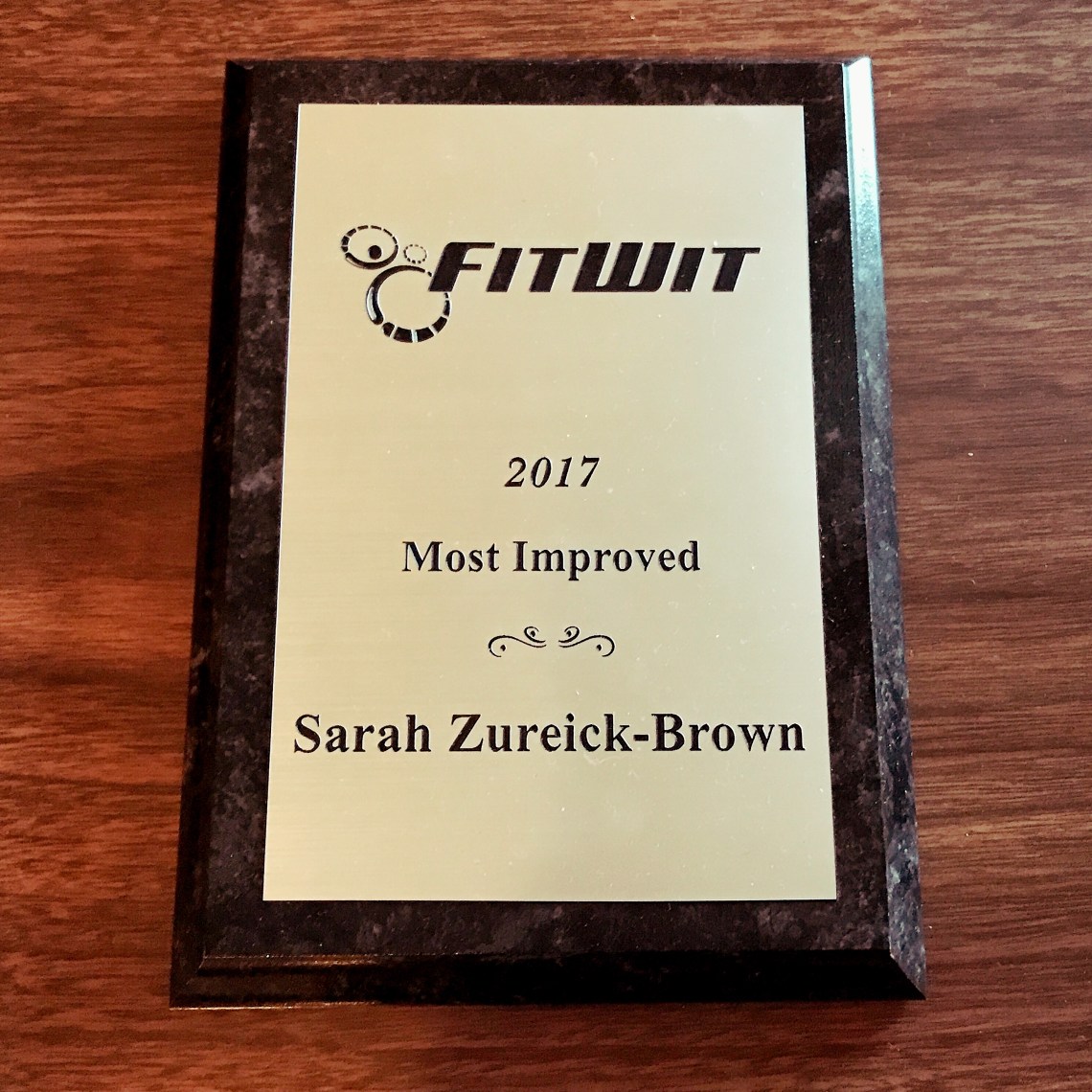
For these efforts, I was named the Most Improved at my gym for 2017. I received the award at our annual banquet in December and accepting it I felt a mixture of pride, happiness, and embarrassment. That’s right. I was embarrassed for being the Most Improved. In the weeks since the banquet, I’ve been trying to understand why being recognized for improvement made me feel this way. Here’s what I’ve learned:

I would have preferred to accept the Best to Begin With award. Being recognized for improvement meant I had room to grow, which of course I did, I wasn’t fit before I joined FitWit. Still, acknowledging this need for growth wounded my inner perfectionist that clings to the fixed mindset approach (i.e., if I’m not good enough to begin with, why bother). I’ve been able to make gains because I’ve adopted a growth mindset, but it’s still a challenge for me to be okay with my need for growth.

I want to live my life differently than I did in the past so I must have been doing things wrong before now. I’ve found that another reason it’s hard for me to want to improve is the challenge of coming to terms with how I’m living currently. I’ve found in some cases it’s better to think of the changes I want to make as shifting preferences (e.g., I want to become a person who wakes up at 7am which means it’s hard for me to remain a person who stays out till 1am). In other cases, I’ve had to let myself experience the pain of acknowledging the fact that I’ve made choices in the past that were not optimal for me (e.g., not having a consistent exercise routine in my late twenties/early thirties). Again, my inner perfectionist wants to avoid the pain of recognizing possible flaws.

The award is just proof of my narcissism. In a world where one can dedicate time to many issues and accomplish much on behalf of others, I was being recognized for spending a lot of time on myself at a gym. This is a tough one because helping other people is important to me and my time is limited, but I know I’m in a better position to help others when I’m taking care of myself. Also, it’s okay to want to take care of myself (as painful as that is for me to write).

I’m dumb for caring so much about this award. My pride at receiving the award embarrassed me because it meant I cared. I love going to my gym. I love working out. It’s hard for me to admit these things because as much as our culture idolizes certain body types it also often dismisses those that pursue fitness as vain, self-obsessed airheads. More generally, it’s cool not to care in our culture. Caring about something makes you vulnerable. At the same awards banquet I received the award, I also performed in a short improv set with other improvisers who go to my gym. I rarely get nervous before improv shows, but I was before this one. I didn’t want to do or say something spontaneously in the moment that would get me kicked out of the gym or make people look at me differently. My gym is super important to me.

In 2017, I acknowledged my need for growth and change. I cared. I improved and was recognized for it. In 2018, I’m going to continue to nurture the growth mindset I’ve cultivated so I can continue to grow. If you’re also looking to make improvements, here are some resources I’d recommend that have guided my thinking about growth:

Mindset: The New Psychology of Success by Carol Dweck
The Power of Habit by Charles Duhigg
The Influential Mind by Tali Sharot
The Power of Vulnerability and Listening to Shame by Brené Brown

And here’s my sweet award that I’m oh so proud of and only a little bit embarrassed by: IMG-0478

My new self-care mantra

I have a hard time cutting myself slack. I’ve definitely filled the role of my own worst critic, and I’ve treated myself more badly than I would treat any other person (although I wouldn’t treat anyone that badly so I’m not too much of a jerk to myself).

The notion of practicing self-care makes me queasy. Shouldn’t I be tough enough not to need self-care? Do I deserve self-care? Isn’t it selfish to practice self-care when most parts of my life are pretty easy?

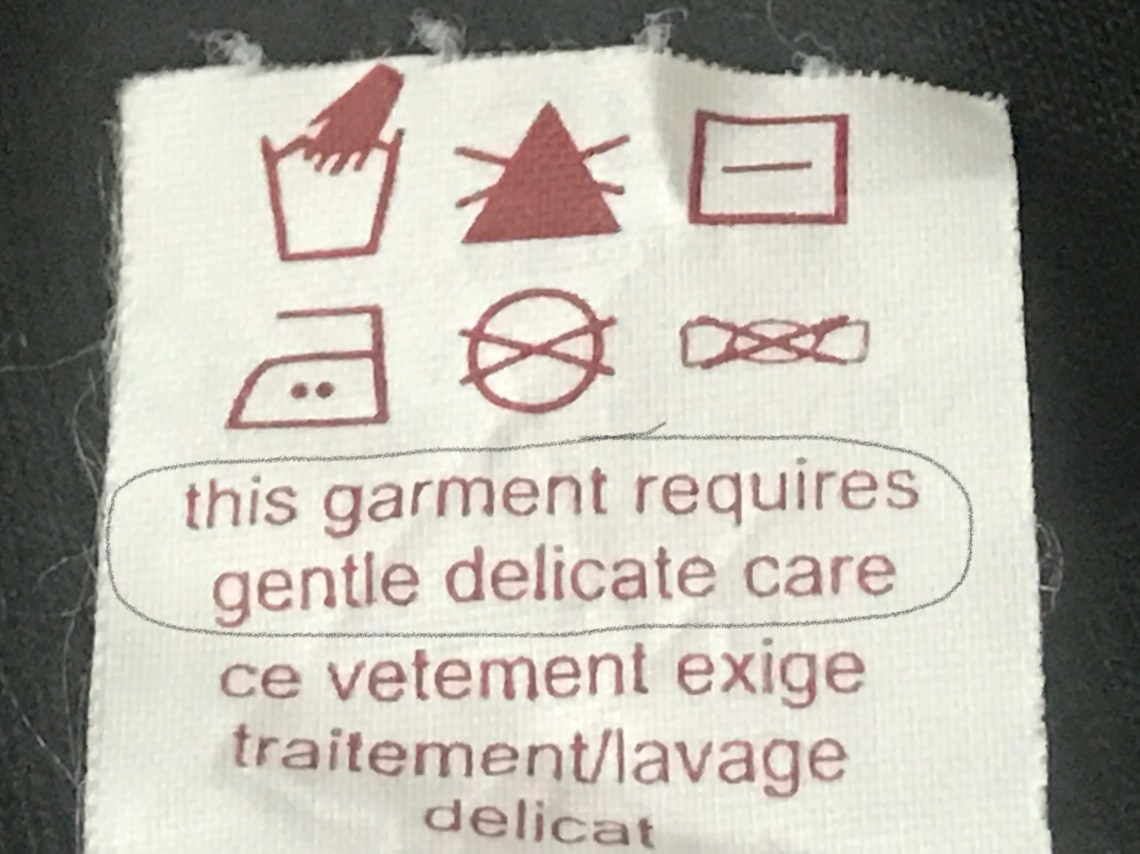
I’m trying to be better about practicing self-care and not interpreting it as a sign of weakness. I received a soft t-shirt as a gift recently from David. It has lovely washing directions that I’ve reworked into a mantra for myself.

“This garment requires gentle delicate care” becomes “this person requires gentle delicate care.”

I’m not “gentle” or “delicate” per se. But that’s the kind of care I want to give myself so that I can continue to be soft and strong.

IMG_3601

Who am I improving for?

I recently started meditating daily using the Headspace app. I love the approach the app takes to meditation because it’s all about training your mind. And like any good training program, they regularly ask you to recall your motivation for pursuing the training. In particular, they encourage you to ask yourself how other people in your life might benefit.

This question intrigues me. Who exactly might benefit from me meditating regularly?  There’s one obvious answer–my husband since we live together and he provides me with emotional support. It’s likely that my coworkers will also benefit since we spend a lot of time together and have to deal with stressful situations on occasion. I’d like to believe my meditation training will also benefit other people in my life–friends, family, students, fellow artists, other people at my gym, etc. But this seems to be claiming a pretty wide sphere of influence and the mechanism is less clear.

Still, I’d like to believe it’s true. Recently I’ve been engaging in a lot of behaviors designed at self improvement (like meditation). I’ve undertaken most of these changes with the goal of making myself happier and more productive. But it’s nice to think that these changes I’m making might benefit others too.

I saw this sign on a hotel while I was on vacation this past weekend and thought YES! I am WE, and while I’m not quite sure who YOU is, I’m not just making these improvements for myself.

Enlight143

I’m a Crab.

Improvisers often stand in circles and play games where we pass around energy. This can be done in a number of ways–by speaking, with eye contact, through movement, by changing places in the circle, etc. These games fuel connection, spontaneity, and a sense of fun and play.

I learned an awesome variant of this type of game last week at the Vancouver International Improv Festival from Matt Folliott, who directed the international ensemble I was part of at the festival. Standing in a circle, one improviser would start chanting “I’m a crab!” and make crab motions scuttling about the circle. The crab would then approach another improviser in the circle and that person could choose to change places with the crab by chanting “I’m a crab” or pass by crossing their arms and saying “I’m a bat.”

It was a silly, dumb, wonderful exercise that filled me with joy. Because standing in that circle with skilled improvisers from all over North America, I realized this is what it means for me to be a professional in my chosen field of work. My job is to play with people, to teach people to play, and to just let loose and be a crab!

imacrab

Why’d I wait so long?

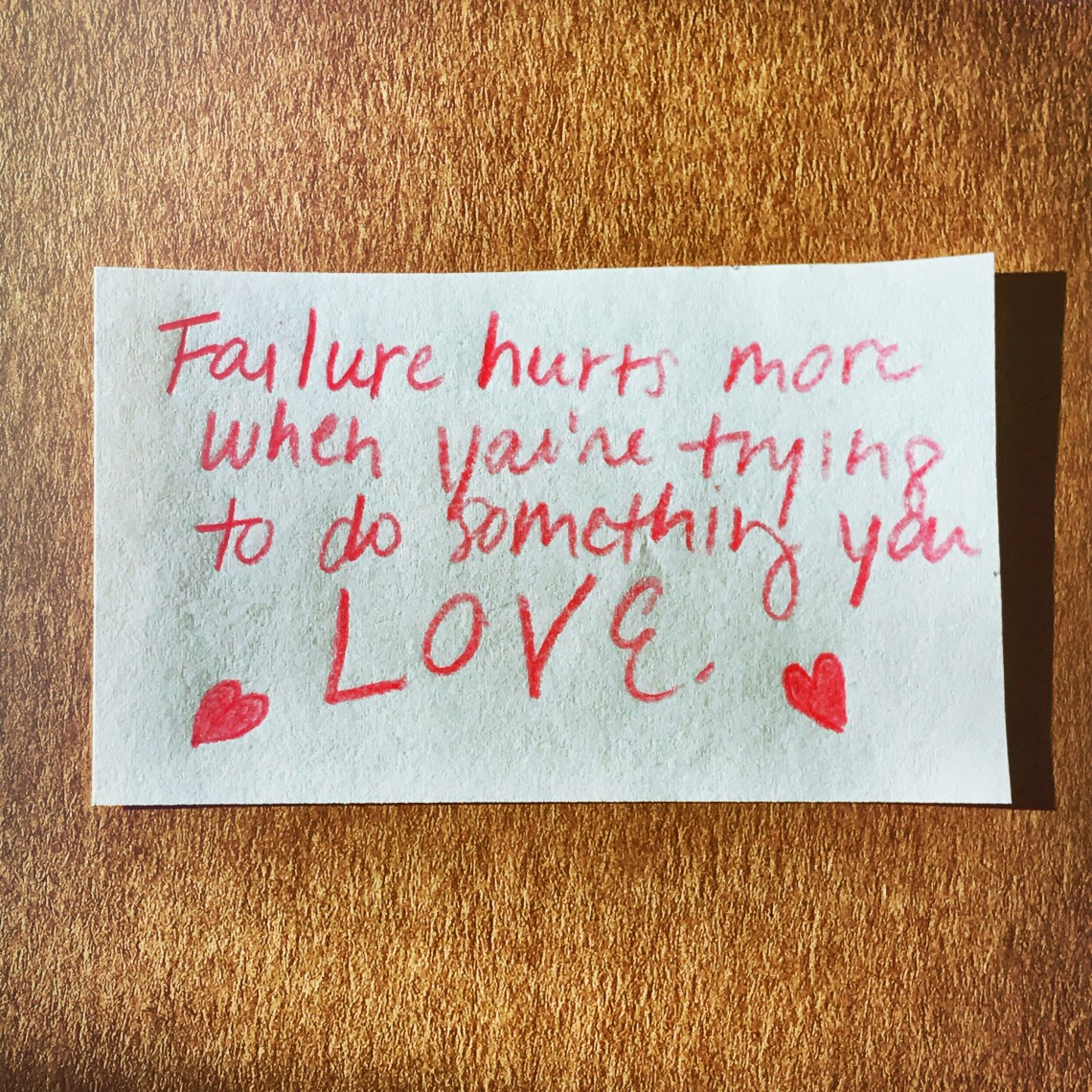
A question came up for me when I was writing the other day–why did it take so long for me to embrace my identity as an artist? I’m nearly 35 and still a bit terrified of labeling myself as such. There are a lot of factors at play, but I think a major one is fear of failure. When I was young, any whiff of potential failure sent me running in the other direction. This was especially true for the things that I loved most like writing, acting, and dancing. I still struggle with handling rejection, but I’m getting better at it. It still hurts, though, especially when it involves something I love.

Enlight104

You’ve got this, Sarah

But do I? Do I really?

I hit the gym early this morning–Monday 7am–because I have a lot to do this week. I have a lot I want to do in life.

I was tired and felt weary during the first portion of the workout–a strength training exercise. As I struggled to push press two kettlebells above my head, my trainer called from across the room, “You’ve got this, Sarah.”

I finished another rep and doubled over, struggling not to cry. Like a great improv scene, the moment had become about more than my ability to lift kettlebells.

There’s so much I want to do–write, act, improvise, teach, coach, lead, read, support other artists, spend time with friends and family, exercise, etc. There’s also some stuff I’m struggling to get through so I can be happier–behavior patterns I’m trying to modify.

Later in the workout, I was attempting to lift a single kettlebell from a kneeling position. My trainer was beside me.

“This feels impossible right now,” I told him.

“You can always scale back,” he responded. “This is about building strength.”

But can I? Can I really? I know I can’t have everything I want or do everything I want to do effectively, but I hate limiting possibilities for myself. Even though I know creativity thrives under constraints.

sport-2249311_1280

Wait. You can’t eat that on Whole30?

Over the past couple weeks, I’ve been trying to eat according to the Whole30 plan. For me, haphazardly embarking on the Whole30 has become a daily exercise in discovering how I’m not in fact in compliance with Whole30.

There were days I made straight up violations: eating peanut butter, soy sauce, bacon, salami, and drinking a probiotic drink (the last three having added sugars that are prohibited according to the plan).

I’ve violated the spirit of the Whole30 on a daily basis: drinking fruit smoothies that taste like milk shakes in the morning and devouring bowls of fruits, nuts, and almond milk that are acting as a substitute for the nightly granola snack I crave.

Interestingly, failing at Whole30 has made me want to do the Whole30. I love the idea of figuring out how different food groups affect my energy, mood, digestion, etc., and I understand now how a full out elimination and reintroduction would test that.

Ultimately, I’m looking to find a nutritional framework that’s stable for me. I’ve found that abstinence based plans work well because it’s easy to just say no to dairy, beans, grains, alcohol, etc. Sugar is another issue because that stuff is hidden everywhere!

It’s easy in some ways to categorically eliminate certain types of foods, and I love the results I’ve seen on these types of plans. But it also leaves me feeling like a jerk sometimes when everyone I’m with is eating cookies or pizza and I have to decline. This generally turns into a discussion of my nutritional plan and who wants to talk about diets while they’re eating cookies?

You see, I don’t want to hinder others enjoyment of cookies. And, ultimately, I want to be able to enjoy cookies too. I don’t want to be so restrictive that it becomes an obsession. But at the same time I struggle with moderation.

It’s Tuesday afternoon, and I want a cookie. Should I have a cookie? What’s behind my desire for a cookie? Will this cookie make me happy? Too many questions! I want my relationship with cookies to be easy, not complicated.

I don’t have the answers. But I do have an obligatory diet-related-blog-post photo of a fabulous salad I ate yesterday with fruit on the side:

2EFB5C92-5814-426B-BEF8-D816EFCDB1B4

Pretty deep thoughts on pretty

I was driving home the other night after a long day of acting classes, rehearsals, working out, etc. that had taken me all over Atlanta. I was hungry. I’d forgotten to bring something to eat, and I’m on a restricted diet right now (Whole 30 like but I’m finding it hard to fight the fight against hidden sugars even though that’s why I’m on the diet). I was tired of driving–I’d been in the car well over two over hours throughout the course of the day.

I was thinking about my face because I’d watched myself on camera earlier in one of my classes. I hadn’t looked how I expect to look based on how I usually see myself in a mirror.

I had an ungenerous thought about how I hold my face–how I’ve been holding it my whole life–and concluded that I’m probably not pretty. I cried.

Looking back in the light of day with a full night’s sleep, I don’t think my assessment was correct. But I’m uncomfortable with how important my appearance has become to me and that I could feel that low about it.

When I was in therapy a few years back, I worked on not judging myself for wanting or trying to look attractive. I think I had it in my head that it was a betrayal of feminism to invest too much in my appearance. Or, the more likely explanation, I was afraid that even if I tried I wouldn’t be attractive so I settled for being smart and took comfort in that.

What’s weird about wanting to be pretty is that by some definitions it’s less than beautiful. As an adverb, it’s a qualifier. I’m pretty attractive. Aiming for pretty feels like settling in another way. Beautiful seems out of reach so please just tell me that I’m pretty.

Please. Pretty please. Pretty please tell me that I’m pretty.

No real resolution here (since resolution would involve taking on society’s destructive standards for beauty, and like the fight against hidden sugars, I’m not up for that right now). Just wanted to highlight something I’m struggling with.

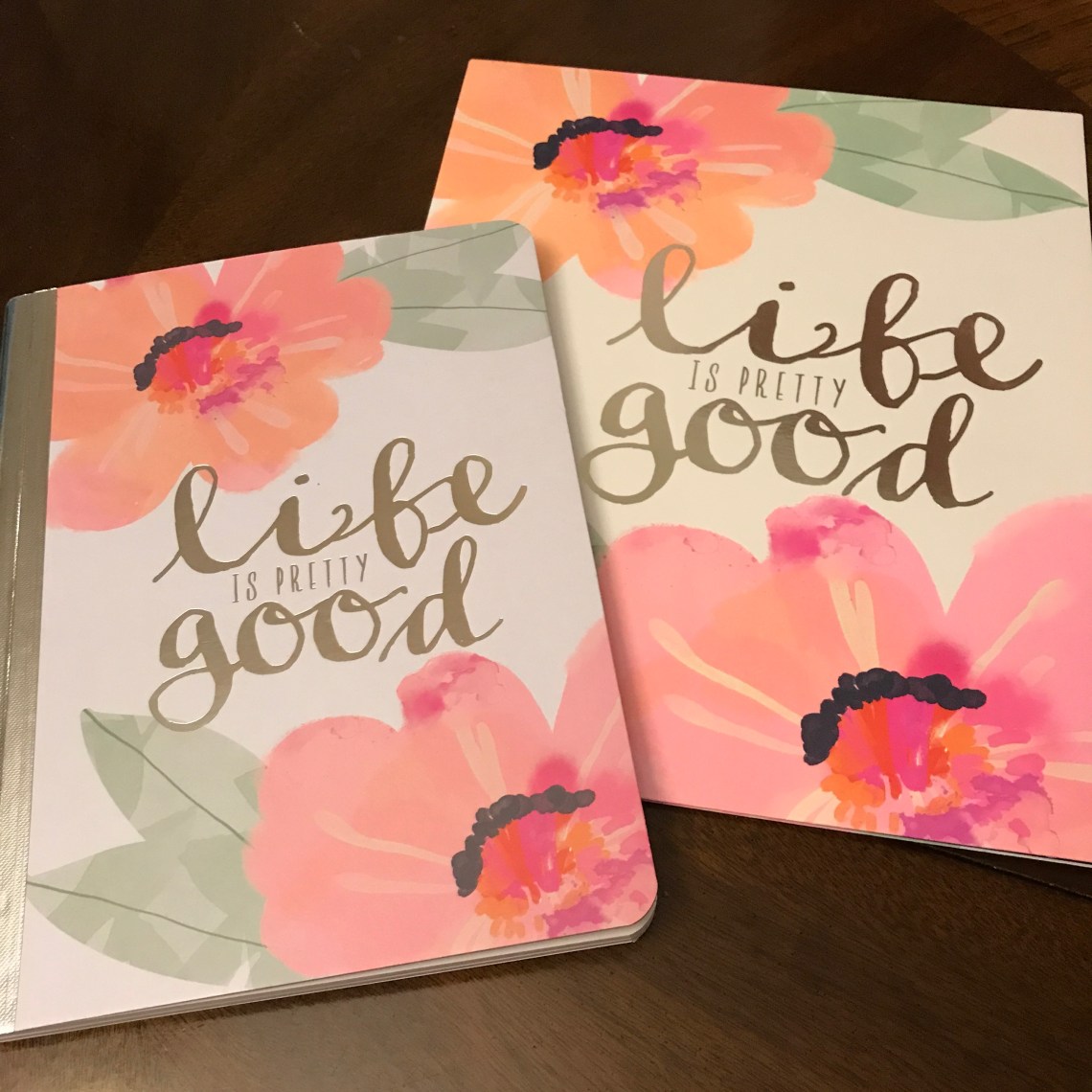
Other than questioning my own attractiveness things are going pretty well. I purchased this pretty matching folder and notebook the other night. Pretty inspiring! A3602FA3-36BB-4D79-80B7-AAAB497C8FD8

With This Ring

David and I are celebrating our sixth wedding anniversary today. We met in November 2005 and married in July 2011, so we’ve been married now for a little bit longer than we dated. I took a photo featuring our wedding rings for my game piece series to commemorate our anniversary.

These rings originally belonged to my grandmother and grandfather who were married in 1948. Sometimes I look down at my finger and feel the weight both my commitment and theirs. My grandparents were married close to 39 years when my grandfather passed away, and my grandmother remained committed to him even after he was gone. For her it wasn’t till death do us part, it was forever.

IMG_0966
Banded.