Tuesdays with Toes – No Time for Goodbye

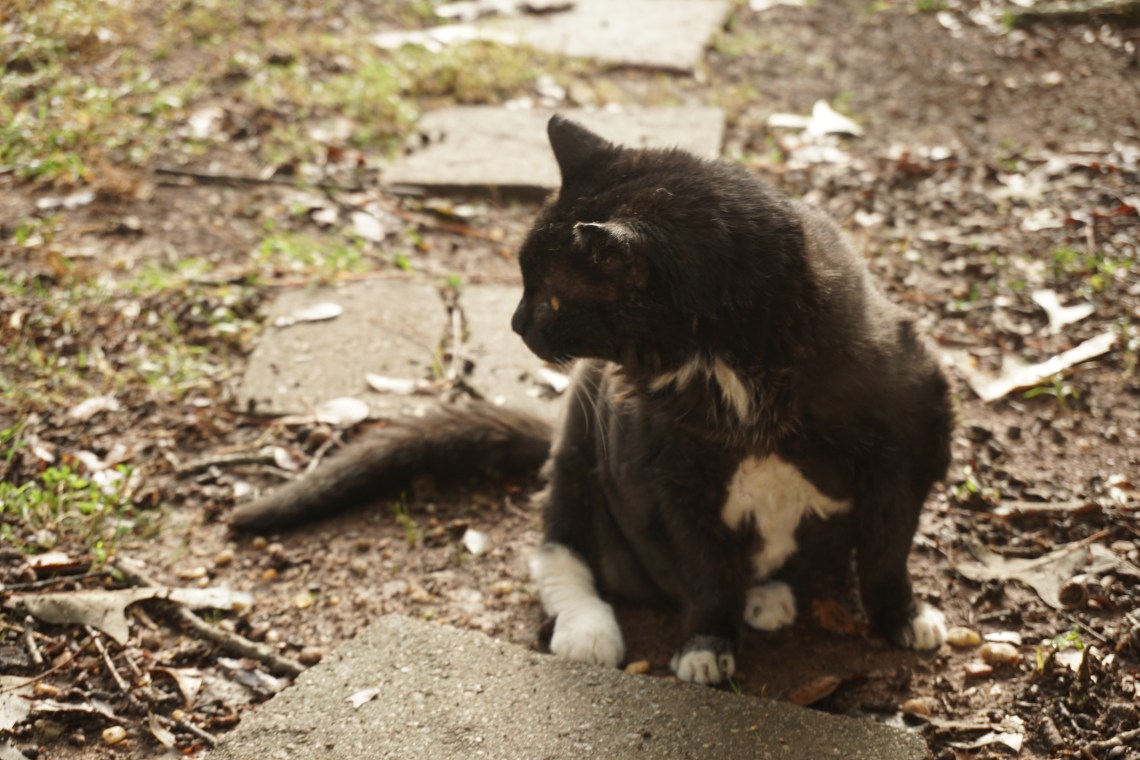
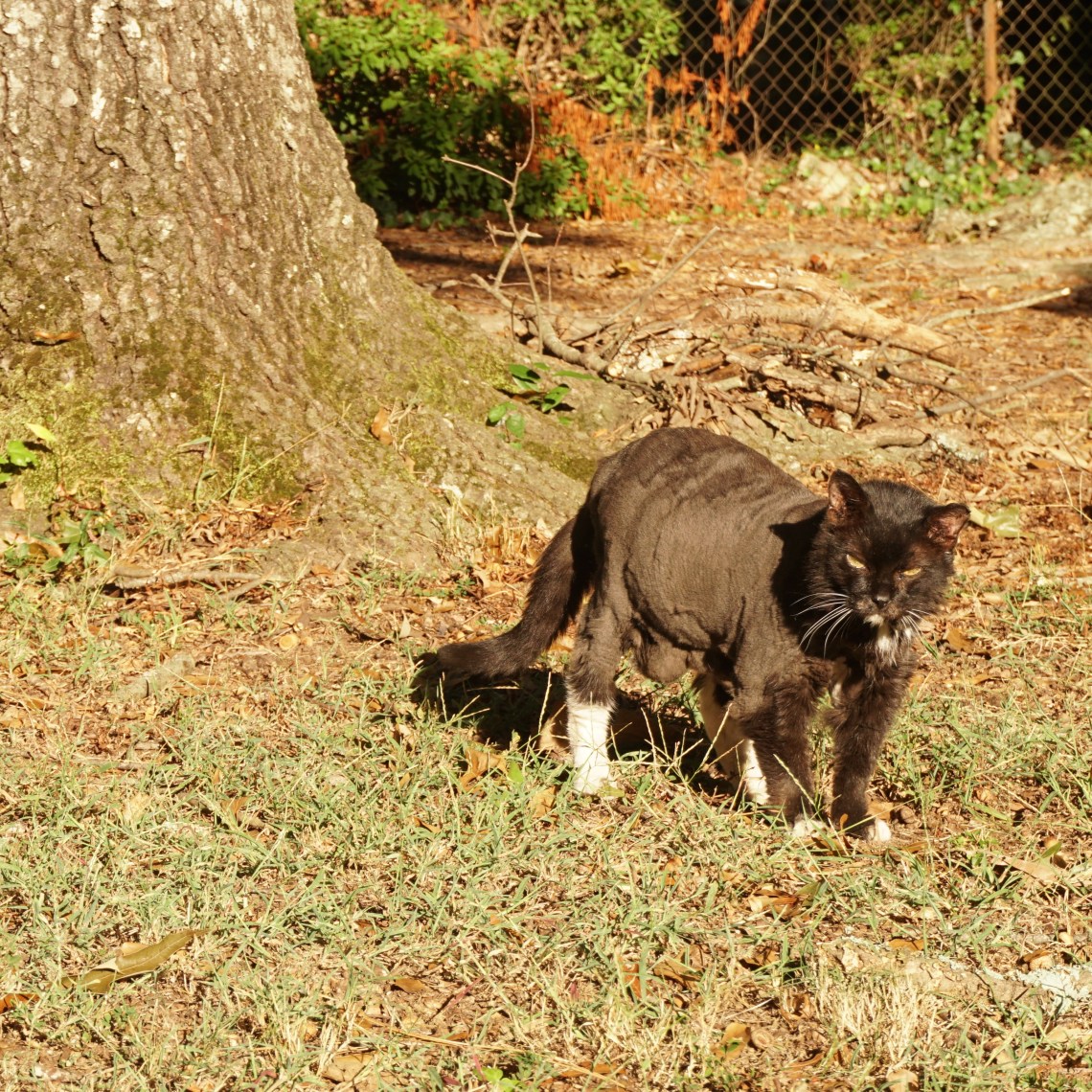
The trip was last minute–a family emergency that took us out of town unexpectedly this past August for a few days. David called our vet’s office to arrange boarding for Toes only to find that they no longer provided boarding. Because our original vet was no longer there. While we were away in Europe, he’d retired, sold the practice to someone else, and the entire staff had changed hands.

Now, if Toes didn’t have chronic kidney disease, the fact that the staff had turned over might not have even registered for me. But I’d been in the vet’s office every few weeks picking up fluids or kidney food. Toes boarded with them whenever David and I traveled together. I knew the staff well and couldn’t believe they were all just gone.

We hurried to find another place for Toes to board and luckily were able to. Dropping her off, I was filled with this sense of sadness about the vet techs and office staff Toes and I would never see again. Instead, I handed her off to strangers.

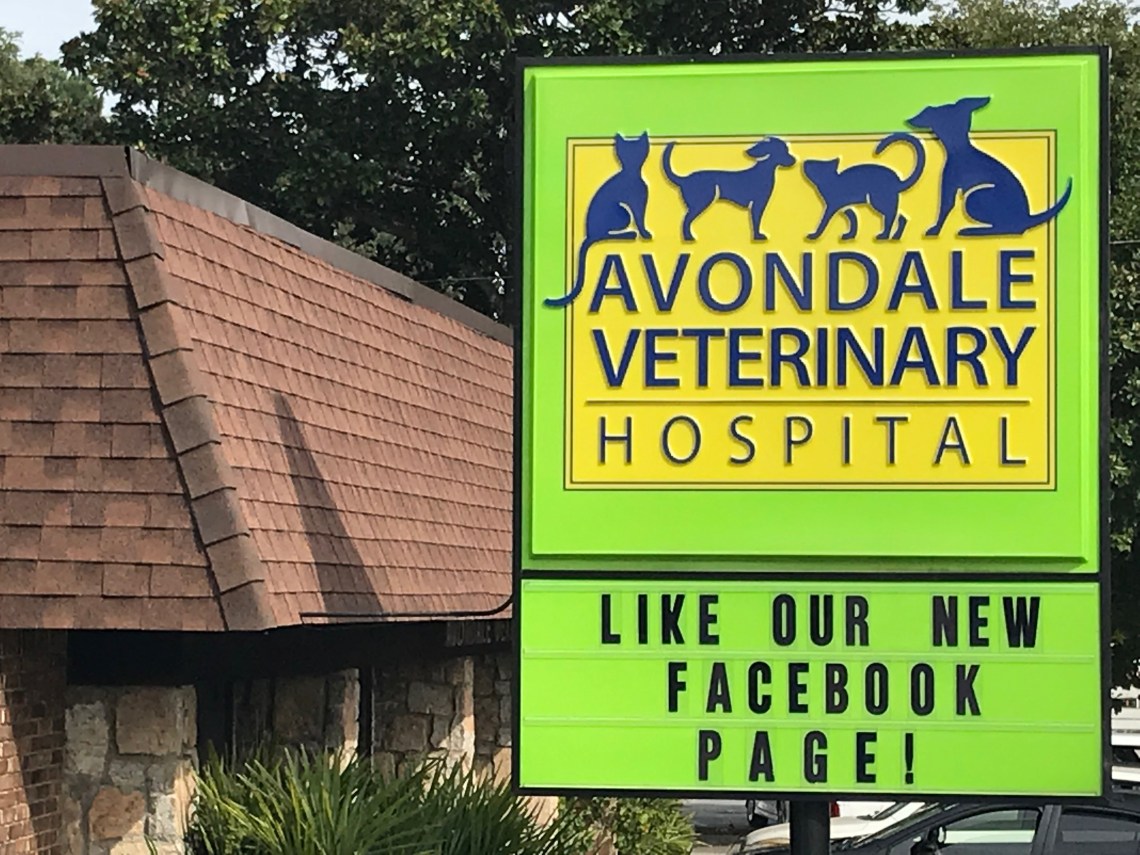
A few weeks later I would take her to meet the new vet that took over the practice. Luckily, I really like the new vet. So much so that I might even follow their sign’s suggestion and Like their new Facebook page.

IMG-7191

Every entrance is an exit from somewhere else

I just wrapped up a six-week acting class with Tim Phillips focused on Building the Physical Life of the Character. I learned a lot in the class about how to take time with a script, be patient, and discover a character. I’m grateful for the process Tim shared and also for the bits of wisdom he sprinkled into the class.

“Every entrance is an exit from somewhere else.”

This was a note Tim gave to some other students regarding the top of their scene when their characters were returning home. It’s one of those obvious statements that nonetheless blows your mind.

Of course the character is influenced by where they’ve just been! How can I use this to start the scene in a dynamic place?

Where you’ve been matters. This is true for characters on stage, and I think it’s also true in life. Whenever you enter a new situation, your attitude and desires in that situation are influenced by where you’ve been and what you’ve gone through.

On a day to day basis, this can be as simple as coming home grumpy after a long work day. On a broader time horizon, this can be wanting a new stage of life to be different from what came before (e.g., college to be different than high school).

I’m in a phase of life right now where I’m trying to pivot and change what I do day to day so I can make a bit more money and keep pushing myself creatively. Unlike my last major career change (leaving academia), I’m not trying to abandon what I’ve been doing, but I’m trying to build on it in a more clear direction.

I’m finding the pivoting process challenging because I’m bringing to it baggage from the past few years. I think about moments of disappointment and want to change the direction I’m going and do a 180 shift again.

But this isn’t practical or sustainable. Every situation I could put myself in will come with its own problems. All I can do now is recognize where I’ve been and how that’s influencing my current state of mind and where I want to go next.

Because I’ll leave this stage too and enter somewhere else.

Enlight148

Tuesdays with Toes – Just When You Think You Know Everything

In November 2016, about a month after we formally adopted her, Toes was diagnosed with chronic kidney disease. David was out of town when we received the news (as he’d been during the bite incident). Therefore, I was alone in the vet’s office when the doctor advised me on the treatment–a special kidney diet and subcutaneous fluids administered every other day.

Before Toes was diagnosed, I’d never heard of subcutaneous fluids, but apparently it’s a treatment commonly prescribed for older cats. It involves sticking a needle in your cat’s back and letting fluids flow from an IV bag into the cat.

When the doctor told me I would need to do this, I couldn’t believe it was something I was capable of. I’m not a vet tech! Plus, Toes was a bite-y cat, and even though she’d been cleared in the rabies quarantine, I was still scared of her.

The first few days she needed fluids, while David was still out of town, I took her up to the vet’s office to have the staff perform the treatment. After David returned, we learned how to do the task together–with me holding Toes in position and singing to her while David did the needle-y stuff.

Eventually I learned how to do the fluids by myself because David travels a lot. And it isn’t practical to take a cat to the vet that often.

Recently, when David was out of town (surprise!), I was having some trouble with the fluids. I couldn’t get them to flow out of the bag. I called my medically oriented family members for help, I called the vet’s office, and eventually realized that a clip on the IV line designed to block the flow had been activated.

For close to two years, I’d been giving Toes fluids, and while I’d seen the clip on the line, I’d never truly comprehended its functionality before then.

The big questions and mysteries of life overwhelm me, but I usually feel like I understand the small stuff. However, my failure to recognize the utility of the clip made me wonder. What other small things have I not figured out yet? 

DSC03615

Tuesdays with Toes – The Quarantine

When we met her, Toes was a neighborhood stray cat. We started feeding her, and she quickly became a fixture of our back deck, begging to be invited inside the house. We couldn’t do that because I’m allergic to cats, but we spent time outside with her every night, feeding her, petting her, and calling her Toes like she was our pet.

A week or two into our new relationship with Toes, I was on the deck alone with her one night. David was out of town. She was sitting next to me on an outdoor couch while I studied lines for a sketch show that was opening the next day.

I was petting Toes absentmindedly while I shuffled around scripts when it happened. Toes ever so lightly bit at my hand to get my attention. While it didn’t feel like she’d pierced the skin, there was a mark there, and I wasn’t entirely sure she hadn’t.

Panic took hold as I realized that I didn’t really know Toes that well. She was a stranger to me, and she could have RABIES. (I have a deep seeded fear of rabies due to repeated warnings I received on camping trips as a child that if a raccoon bit me I would need to get twenty-one shots in the stomach.)

When Toes grazed me with her teeth, it was late at night. I went in and washed my hand. I tried to calm myself down and go to bed, but I slept in fits and rose early the next morning still mired in fear. The fear eventually led me to the ER (it was a Saturday) where I showed them the most minuscule of possible puncture wounds.

Nobody was taking any chances so the doctor there urged me to have Toes put under quarantine to observe her for signs of rabies. I went from the hospital to the DeKalb County Animal Services where I explained the situation to them through MANY tears. They dispatched a couple of animal patrol officers to pick Toes up from our back deck and take her into quarantine.

One of these officers called me within the hour, “we got her.”

There were a couple aspects of this experience that were particularly trying. First, it was embarrassing crying in front of ER doctors, animal control officers, and my friends later that evening when I finally got to my sketch show. Second, because I have such an overwhelming fear of rabies, I didn’t feel like I could make a rational decision about how to address the biting. Luckily there was a system in place to help me, and I found comfort in that.

So remember, whatever you’re going through, someone else has likely gone through it before you, and it’s possible there’s already a protocol you can follow. 

DSC03623

A Meditation Milestone

I started meditating regularly in the fall of last year, and today I hit a pretty cool milestone–365 days in a row using the Headspace meditation app. Developing a meditation practice has been transformational for me, so I thought I’d outline my experience and the benefits I’ve seen for others who might be interested.

Before a friend recommended Headspace, I knew I wanted to try to meditation but found the process of developing a practice intimidating. I’d downloaded a few meditation tracks to my phone, but I used them infrequently and mainly when I was in crisis mode. With Headspace, the path to starting a practice was clear–the app features a 30 day ‘Basics’ program that offers a simple, straightforward approach to meditation helpfully illustrated with animations.

After 30 days, with the Basics program under my belt, I started exploring some of the other topic specific packages that Headspace offers (e.g., a 10 day program on Prioritization). I also started using one off meditation tracks available through the app designed to help you Unwind, Restore, Refresh, etc.

I used to listen to podcasts before falling asleep at night because I needed something to distract my mind. Now I use the sleep focused meditations Headspace offers in conjunction with sleep sounds available through the app. I do this nightly, and I also try to meditate in the morning when I wake up although I’m not as consistent with this as I would like to be.

In addition to using the Headspace app, I’ve read/listened to a few books this year that have been helpful in understanding the principles and benefits of meditation as well as theories on thoughts and emotions:

10% Happier: How I Tamed the Voice in My Head, Reduced Stress Without Losing My Edge, and Found Self-Help That Actually Works–A True Story by Dan Harris
Search Inside Yourself: The Unexpected Path to Achieving Success, Happiness (and World Peace) by Chade-Meng Tan
How Emotions Are Made: The Secret Life of the Brain by Lisa Feldman Barrett

The benefits I’ve enjoyed from meditating regularly include better sleep and improved focus throughout the day. What’s more, meditation has changed my relationship with obsessive thoughts. I’ve long suffered from these and used to feel that I was a prisoner to them and my emotions. Meditating regularly has made it easier to handle these thoughts when they arise and to process my emotions.

With the Headspace app, one question you’re asked to ponder early on is who will benefit from your practice. For me, meditation has made me a more attentive teacher, colleague, and friend. It’s made me a better spouse. And it’s made me a better person to myself.

Tuesdays with Toes – It’s Good to Know What’s Out There

Toes primarily stays inside, but about once or twice a day we let her out into the back yard where she likes to bask in the sun and walk around a bit. She never goes very far, and her old age keeps her from hopping the fence.

Last week I let her out to roam while I took the trash and recycling cans from the side of the house to the curb. I had the side gate open, and when I returned to the side of the house, I found Toes at the gate looking toward the front yard.

My first instinct was to swing the gate closed so she couldn’t escape, but she walked past it before I got to her. The gate breached, I let her walk forward a little further, staying close by so I could snatch her up just in case. (She’s a very slow moving cat.)

She walked to the end of the house where she had a full view of the front yard. She considered it for a moment. I thought I might have to grab her, but then she turned around and walked back into the back yard of her own volition. My heart flooded with relief–Toes does want to be our pet!

She just needed to see what else was out there. 

DSC03613.JPG

The War in my Mind is more like a Skirmish

I did not go boldly into the theater when I went to see Vernal & Sere’s production of 4.48 Psychosis. I walked in slowly with my husband, David, choosing the seats closest to the door in case I needed to make a quick exit.

The four actors in the play were already on stage performing an unsettling pre-show routine that combined movement and sound.

“This show has already exceeded my expectations,” David said to me as we sat down.

It was David’s first Vernal & Sere show, and I knew he was in for an experience. This theater company’s productions always inspire me as an artist. The talent and commitment of the actors, their use of movement, the immersive nature of the technical elements, and their willingness to take on bold AF material are just some of the things I admire about them. Their shows always challenge me.

In the case of 4.48 Psychosis, I was worried that the challenge might be too much. The play, written by Sarah Kane, centers on a person’s struggle with severe depression. Kane herself committed suicide shortly after completing the play and before it premiered.

Given the material, I knew the show would bring me head to head with my own mental health challenges. These tend to lean more toward anxiety than depression, but I find my anxious mind is aspirational. It’s always looking for more despairing ways to worry. In attending 4.48 Psychosis, I was concerned I’d learn something new that would cause me significant distress.

This didn’t happen. My unease at the start of the play was replaced with a calm collectedness about midway through. I thought I’d be looking into a mirror, seeing a reflection of the war that happens in my mind. Instead, what I saw on stage was much worse than what I usually experience. If 4.48 Psychosis depicts a full on battle, what happens in my mind, at least currently, is more of a skirmish (limited engagement, some casualties, no clear winner or loser).

The onstage battle was difficult to watch, but for me there was still something hopeful about the portrayal–namely the supportive and cohesive nature of the ensemble. As loosely defined characters, the performers fought with each other but also comforted each other. As actors, they supported the shit out of each other in every moment. This reminded me of the people who have been willing to help me over the years. It also reminded me of how I’ve stepped up and helped myself.

One of the ways I’ve helped myself recently is adopting a mindfulness based approach to dealing with my anxiety. I’m practicing recognizing thoughts as thoughts and not a definition of reality (i.e., just because I think it, doesn’t make it true although my body may react as such). In moments where the 4.48 Psychosis production became intense, I adopted a similar approach breaking down the experience into its component parts: actors moving across the stage, lights turning on and off, words being spoken from a script, etc.

Theatre allows us to engage topics that are difficult to broach like depression and suicide. It gives us access to a space where we can navigate emotionally challenging territory and then leave afterwards. I’ve always considered the benefit of theater to be preparation for real life or to help process what’s happened in real life. With 4.48 Psychosis, seeing it made me question the reality of real life. Is what I think true? Are my thoughts me?

What is true and tragic about this play is that its author did commit suicide. Knowing a real person went through what you’re seeing on stage makes for a harrowing viewing but an important one. Globally 800,000 people die each year from suicide according to the World Health Organization. Many more attempt. Shame keeps people silent on mental health issues. I appreciate Vernal & Sere for bringing these experiences to light and reminding me and many others that we are not alone in our struggles.

On Striving to be an Object of Men’s Desire

“Hey!” a man shouted to me as he leaned out the passenger window of a white van.

I was standing on the sidewalk trying to take a picture of a mural on the other side of the road. His words took me by surprise, and I barely had the chance to say “hey” in response before the van drove along.

I’m usually friendly to men who call out to me on the street. I trace my accommodating behavior back to the first time this happened to me. I was probably about eight and walking down the street with a teenage neighbor. A man (possibly a friend of hers) driving by called out to us from his moving car. She responded by waving and yelling back to him.

“This is how it’s done,” she told me.

It’s cool to be called out on the street, I thought, and stored the idea away.

In the years since, while I’ve come to recognize this behavior as harassment, there’s still a part of me that enjoys it. Because it means a man desires me. And I want to be desired by men. Even though I’m married. Even though I’ve achieved a lot of other things in my life unrelated to men. Even though the men who desire me might not be men who I desire.

Around the same age I was first called to on the street, I occasionally played pool with a boy about my age who was my neighbor. I don’t remember much about playing pool, but I do remember the walls of the room where we played. They were lined with Playboy style posters of nearly naked women with huge breasts.

While it was an awkward setting for a kids pool match, I liked playing there and having access to this secret part of the adult world. I didn’t think I would ever be like the women I saw on the walls, but part of me wanted to be.

Over the years, I’ve defined myself in a series of identities–Christian, feminist, academic–that have challenged this want to be like the women on the walls, but I’ve never quite let go of my hope to be thin and voluptuous and beautiful–to be the object of men’s desires.

At 35, I’m in the best shape I’ve ever been. While I’ve pursued fitness for a host of reasons, one of the results of my considerable efforts is now I finally resemble the women I admired as a child. I watch myself change in the mirror at night and think, Yes, good job. Men will want to have sex with you.

It’s not a particularly useful thought at this stage in my life.

I’ve been with my husband for thirteen years. Sure, I want him to desire me, but it’s not just his approval I seek as I look in the mirror. It’s also the men who might call out to me on the street. And the men who might put posters of me on their walls. The men who might look me up on the Internet in this day and age.

As a child, I was taught to seek out this approval while playing pool and while walking down the street. I learned this in the same places that boys learned that they could call out to me when they wanted and put naked pictures of me up on their walls.

We’re experiencing a cultural shift now that’s challenging the traditional heteronormative gender dichotomy of women as objects of desire and men as handlers of these objects. Even as a Women’s Studies major, this shift has been hard for me to navigate. How exactly am I supposed to think about my sexuality if it’s not in relation to a man’s approval?

I’m not sure I have the answer, but I know where I’m starting. I’m pulling down the poster of myself I stare at every night (i.e. I’m covering up my mirror). At least for awhile. At least until I can look into it and not have my first thought be a man would definitely approve of this.

Tuesdays with Toes – Ask for What You Want

I remember the first extended conversation I had with Toes. David was out of town, and I’d gone to see the movie The Lobster with a couple of friends. After the movie, I came home to an empty house and sat out on my back deck drinking wine. Toes surprised me by jumping up on the fence alongside the deck and greeting me with a series of meows.

If you’ve seen The Lobster, you know it’s a dark twisted comedy that involves humans being turned into animals. As Toes, a strange neighborhood cat at this point, meowed at me, I couldn’t help but draw a parallel to the movie and wonder if she was secretly a human asking for help. I freaked out and went inside.

Weeks later, David and I were sitting on the back deck at night drinking wine when we heard Toes meow at us from across the yard.

“Maybe we should give her some milk,” I said to David as she approached.

We did, and the next day I went out and bought cat food for her. In turn, Toes became a fixture on our deck, staring into our back door with wide golden eyes and meowing so insistently that at times it felt like I was in a horror movie–being stalked by a cat who couldn’t be fed enough.

On the surface, David and I were unlikely candidates for pet ownership. I’m allergic to cats and both of us dislike responsibility except for things we’re truly passionate about. But Toes insisted on being our pet.

I wrote last week about the challenges of saying No, and I want to follow up on that today by acknowledging the difficulty of hearing No. It can be hard to ask for what we want because we open up ourself to the possibility of rejection and rejection hurts.

Toes didn’t have a whole lot of options–she was a hungry, seemingly abandoned domestic cat. Her insistence was driven from biological need.

Our pursuits might be less biologically driven, but there’s still something we can learn from Toes desperation. In pursuing your dreams, you’re likely going to need help from others. You have to open yourself up to the possibility of rejection and be willing ask for help despite this risk. 

DSC03489_crop

Just Say No for Creatives

As an improv teacher and performer, I believe wholeheartedly in the power of Yes, And. However, having witnessed and suffered personally from the destructive power of too much Yes, today I’m taking a tip from the D.A.R.E. handbook and urging my fellow creatives–sometimes we’ve gotta Just Say No.

Before I delve into the reasoning behind my campaign for saying NoI want to state for the record that I think it’s important to say Yes a lot. Why’s that?

  • Saying yes pushes you out of your comfort zone. Beginning improvisers are encouraged to say Yes so they’ll support each other’s silly and wacky ideas rather than judging them. If your default mode is Yes, you’re going to accept challenges you might not otherwise be inclined to take on.
  • Saying yes helps you grow as a creative and make connections. Building a creative career takes hustle and determination. You need to work a lot at your craft, and many creative endeavors are collaborative. By saying yes, you gain experience and make connections with others that may prove fruitful down the line.

There are many benefits to saying Yes. Yes is powerful! However, problems arise when you say Yes too much:

  • By saying Yes too much, you’re effectively saying No. As people, we’re limited by our time and energy. It’s pretty simple math–if you say Yes to more projects than you have time to complete, you won’t be able to do things you’ve committed to well. Your Yes becomes a No.
  • Even if you can complete the work you’ve committed to, you might not enjoy the process if you’ve said Yes to too much. Remember why you’re saying Yes to creative projects–because you enjoy being creative. If you say Yes to too much, the process becomes a burden rather than an opportunity to do the thing you love.
  • You won’t have time to watch others say Yes if you’re always focused on your own Yes. Artists need audiences and a great way to develop as a creative is to watch and support others in their craft. Be there for other artists. Really be there!
  • You allow Yes to take the lead instead of focusing on what’s important to you and creating your own opportunities. Any quick scroll through social media will show you that about a million things are competing for our attention–shows, classes, the upcoming Spartan Race in Georgia (okay maybe that last one’s my feed). It can be seriously overwhelming. Not only do we not have time to say Yes to all of this, trying to to say yes to so many things creates a sense of fractured purpose. Ask yourself what matters to you and allow this answer to guide you in creating and finding opportunities rather than just letting opportunities find you.

There are a lot of compelling theoretical reasons for being selective with your Yes. But there’s a practical challenge to overcome: it can be really hard to say No (hence the D.A.R.E. campaign).

Why’s it so hard to say No as a creative? Because maybe this is the opportunity that will lead to your big break! And you can’t say No to your friends! What if you say No to this and no one ever asks you to do anything again? Your creative career will be over! Note that this logic is being driven from a place of fear rather than a place of enjoyment.

In reality, what to say yes and no to isn’t a perfect science–it’s a balancing act of time, desire, and opportunity. Practice saying No so you can really: (1) say Yes to completing and enjoying your work, (2) say Yes to your collaborators and honor your commitments to them, and (3) say Yes to other artists by witnessing their work.

Hustle. Work Hard. And sometimes Just Say No so you can truly say Yes.