Tuesdays with Toes – Easy Ways to Name a Pet

My parents have a tradition of naming new pets after old pets they resemble. They’ve had two dogs named Piggly and three Siamese cats with variants of the name Clam: Pismo C. Clam, Clamboy, and George Clam Dickel. There was a Mama and a mini Mama–mom and daughter cat look-a-likes. There was only ever one Darcy, a beautiful brown Burmese cat I considered mine even though technically she was my parents’ cat.

When Darcy died, I thought I’d never love a cat again. Allergies prevented me from getting a cat of my own. But then came Toes.

Toes was a neighborhood cat who wandered into our yard. My first thought when I saw her was that she looked a lot like my parents’ cat Socks, who had recently passed away. But whereas Socks had a full set of white socks complementing his black coat, Toes had white socks on her back paws but on her front paws only her toes were white.

“Toes!” I called her in honor of Socks.

Like many well loved cats, Toes has an official name, Toes, and a nickname we often call her, Sweet Girl. This isn’t because she’s an overtly sweet cat. As you can see from the picture below, she has a rather gruff exterior. But if there’s one thing I’ve learned from Toes, it’s that you can be a nice cat and still advocate for what you want. Being sweet doesn’t mean being a pushover.

DSC03507.JPG

My Miscellaneous Life

Sometimes my interests and passions and hopes and dreams feel like a messy pile of papers or a long list of files downloaded from the Internet. They’re grouped together by virtue of being part of me. They’re mine. But I don’t feel like I can summarize them in a title that would characterize my life. Like someone dedicated to a profession might. Or someone who has earned honors in a particular area. Or someone who highly values their family role.

I’ve always wanted to be something, but I’ve had a lot of trouble pinning down what that something is. I think the closest I’ve gotten is artist which still seems quite general.

Part of the problem is that I love learning, and the desire to learn is always taking me off in new directions. Down new avenues toward something I might become and hopefully something I’m meant to be.

However the older I get the more uncomfortable I am with the idea that I’m meant to be something in particular. So I’m trying to make peace with the other option–a miscellaneous life characterized by varied interest that keep changing as I move, age, and meet new people.

In recognition of my miscellaneousness, I’ve introduced a new tab on the main menu of my webpage–a miscellaneous tab where I’m going to document things I’m interested in like visiting cemeteries around the world.

Keep an eye on the tab because I plan to add more soon. Gotta document those passions!

Whole30 – Take 3

The first time I tried to do Whole30, about a year ago, I failed because of lack of preparation. I didn’t understand how the program worked and found myself the first few days saying again and again, “Wait. You can’t eat that on Whole30?” Eventually, I threw in the towel unwilling to give up peanut butter and bacon (which generally contains added sugars).

I’ve been wanting to have another go at it, especially to test the effect of eliminating added sugars in my diet, but holidays, travel, etc. kept me from taking the plunge until about two weeks ago when I embarked on Whole30 again.

My second go around was a much better start. I bought the book. I prepped my meals. The first few days felt great. But then we were called out of town unexpectedly for a family emergency. I didn’t want to have to explain to my family members, who were dealing with enough stuff, why I wasn’t eating cheese or bread or beans or peanut butter or anything containing added sugars. So I dropped Whole30 and ate a cannoli parfait (which it turns out is the perfect way to eat a cannoli because it’s in a cup and there’s extra cannoli cream).

Ah, memories. Anyway, fast forward to today where I’m back home and now on Day 2 of Whole30. I really want to make it work this time. In the five days I was on the program before my trip, I could feel the benefit of regulating my sugar intake. My mood felt much more stable, and I stayed full longer. One of my major goals right now is gaining strength, and planning and prepping my meals is going to help me eat regularly and boost my protein intake–both necessary for achieving my goal.

One of the steps you’re supposed to take before starting Whole30 is announcing your intention publicly. I’m a little late to the game on this, but I’m about to go to a party with cookies and lemonade. So I wanted some accountability from the Internet. Thank you for being my witness.

Living in the Moment

It’s been a bit since I last wrote a note. I spent the last week of June and pretty much all of July traveling around Europe. While there were plenty of noteworthy things happening, a friend encouraged me to “let go of should” on my trip. So while I felt I probably should blog and write and figure out my life instead I tried to live in the moment and honor my impulses.

I’d purchased a nice camera before my trip so one way I spent my time was taking photos. I had a pretty basic knowledge of how to use my camera before I left, and it was a lot of fun learning more about photography as I explored different places: Zagreb, Amsterdam, Schiermonnikoog, Brussels, London, Paris, Heidelberg, Frankfurt, and Berlin.

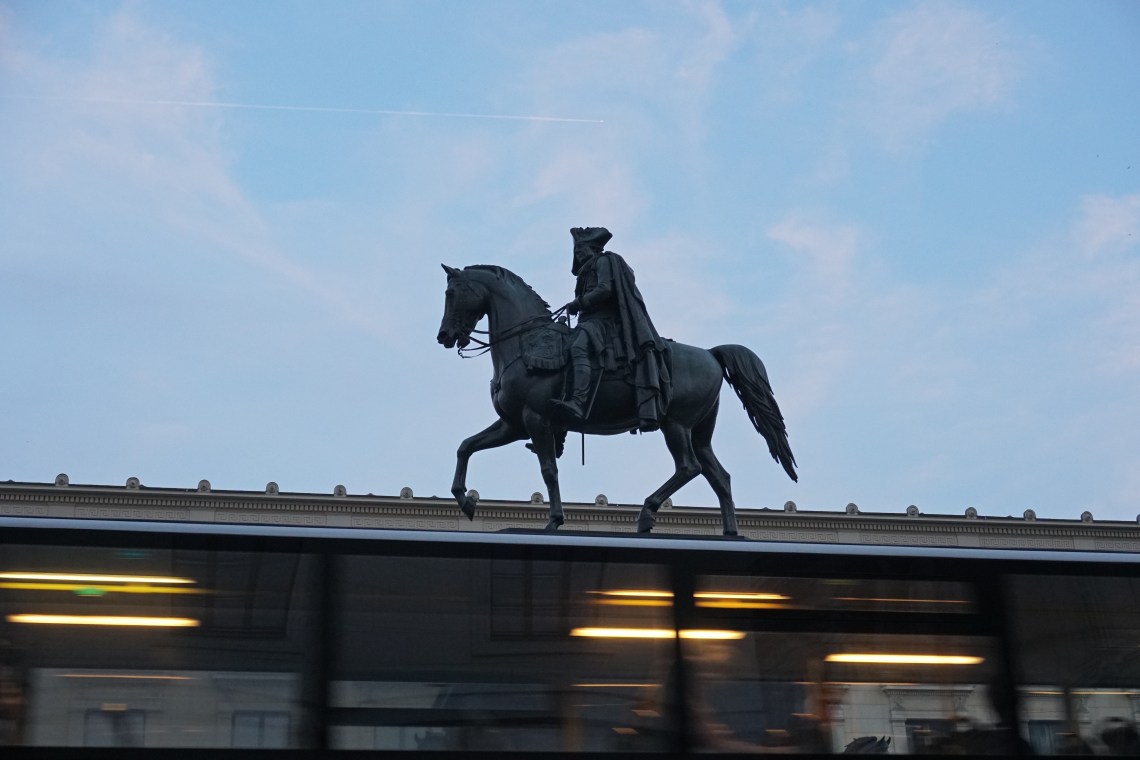
I operated on a volume principle–take a lot of pictures at different angles in hopes some of them will turn out good. Below is one of my favorite photos I took in Berlin. For me, it captures the beauty of living in the moment. The moving bus, the stationary statue of the man on the horse, and the moving small speck of plane in the sky all come into alignment for a brief time. I manage to document it. Within seconds, the bus is down the street and the plane is off to who knows where and the moment has changed.

DSC02502_edited

Keep the Comedy, Ditch the Self Loathing

I was reading through old journals yesterday prepping for a reading I’m going to be doing this weekend when I stumbled across this from January 24, 2011: “I’m excited to become a comedian because it is one profession where self loathing is an asset.”

Reading this rattled me for a couple of reasons. First, the timing of the writing. In 2011, I remember jotting down jokes on the bus to and from work, but I wasn’t actively pursuing comedy. I wrote this two years before I signed up for my first improv class, four years before I started doing comedy full time. Given the time lag, it almost seems like a prophecy.

The other thing that rattled me is that I disagree with the statement I made about self-loathing being an asset. Having worked in comedy and the arts for a few years, I no longer subscribe to the tortured artist myth–that is believing artists are self sabotaging, drunk, crazy people who’ve made bad life choices and should just get a real job.

Comedians and artists are people who’ve chosen to take an honest look at their life and the world around them and to relay those findings to others. This honesty can look like self loathing because we’re admitting we’re not perfect. We’re admitting we have flaws. But admitting you have flaws doesn’t mean you loathe yourself. In fact, it can be the first step to loving yourself more.

For me, when I finally signed up for an improv class, it was because I was drowning in a sea of unhappiness and wanted to reconnect with things that made me happy when I was younger. Admitting I was unhappy and trying to take action on it was a huge step in healing.

I see this with students in my improv classes. Some come to improv when they’re looking to make a change in their life. Some take improv classes to reawaken their creativity. Some are looking to have fun and connect with others. Seeking out comedy tends to come from a place of self improvement rather than self sabotage.

To do comedy at its most basic level, you have to be willing to stand in front of a group of people and believe what you’re about to say is important enough for them to listen to. You can do this and loathe yourself, but it’s probably going to be more fun for you and for the audience if you care about yourself and are confident in what you’re doing. Which doesn’t mean covering up flaws–the truth is what’s funny after all.

If I had to rephrase my statement from 2011 to reflect my current reality, it would go something like this: “I’m excited to be a comedian because it is a profession that allows me to be honest, connect with people, and entertain them. Comedy makes me happy.”

The scenes that never were

In my two years of teaching improv, the class I’ve taught most often is Intro to Long Form. In it, students learn to improvise scenes based off of true personal stories (a format referred to as Armando in improv circles). I love teaching this class because students get to know each other through sharing their stories and these stories provide jumping off points for super fun scenes.

There’s an exercise I use in class to work on generating scene ideas that I call Plates of Ideas. I have one student tell a true personal story and then the other students write down three ideas for scenes based on the story (each idea goes on a separate slip of paper). They then place these slips of paper on plates marked 1, 2, 3–the numbers corresponding to whether this was their 1st, 2nd, or 3rd idea. Then, one student will draw an idea from a plate and initiate a two person scene based on that idea. Much scrutinizing of handwriting and hilarity ensues as this process is repeated for a series of scenes based on the initial story.

There are a number of things I like about this exercise. 1) Writing down three ideas stretches the imagination, encouraging students to go beyond their first idea for scene starts based on the story. 2) Sometimes students will draw similar ideas for scene starts, but we’ll see the scene play out in different ways based on the choices the improvisers make. This is also a good opportunity to point out we don’t necessarily want to see three scenes in a row about toaster ovens in an improv set where somebody tells a story about a toaster oven. 3) Finally, initiating scenes based off of other’s written ideas gives students the opportunity to honor and build on their classmates’ suggestions. A willingness to support the ideas of others is one key to success in improv, and this exercise gives a taste of what that support feels like.

We never get through all of the ideas students have written down for scenes so at the end of the day I have a lot of little slips of paper left piled up on the plates. I love reading through these ideas after class and thinking about the scenes that never happened.

Part of the magic of improv comes from knowing at the end of a set you’ve just created something that will never be repeated because it was all made up on the spot.

Another part of the magic comes in the beginning of the set and during it when there are so many possibilities for what will happen next. Each moment in an improv set improvisers are making choices: to initiate a scene based on idea or not, to react one way versus another, to walk on in a scene or edit it, etc. Improv sets are determined both by what happens and what doesn’t happen on stage (action and non-action).

Improv scenes that do happen are an expression of idea made tangible for a brief moment in time. Ideas for improv scenes that never happen are either not expressed or bantered about in the green room afterward, e.g. “I had this great idea to play a piece of toast.”

The scene ideas on slips of paper left over at the end of my class represent an impossibly small fraction of all the improv scenes that never were (basically zero in a mathematical sense). Reading through them serves to remind me of one of the things I love most about improv–how full of possibility it is.

IMG-3941

Loneliness is wanting things from other people

Enlight100

I pass this pavilion often on my way home at night. It’s tucked away in a park so I only see it from a distance. It’s brightly lit against a backdrop of dark trees, and the turquoise blue restroom doors stand out against the white brick. It’s a beautiful structure in my opinion. And seeing it at night fills me with an incredible sense of loneliness.

For months I’ve been trying to unpack this mystery. Why does this building make me lonely?

Recently the answer hit me–loneliness is wanting things from other people.

The bright lights and lovely doors seem to cry out, “Come enjoy me.” But it’s night and it’s dark and I should probably be in bed already and it’s possibly illegal to be in the park that late so of course I’m not going to stop. My not stopping makes me feel lonely on behalf of the building.

The loneliest I’ve ever felt in a traditional absence of connections sense was in college. I was smart and funny, and it seemed absolutely no one wanted to date me. My friend group wasn’t cohesive, and my closest friends all had significant others which amplified my awareness of not having “my person” I could rely on for companionship.

In college, I often ate alone and spent evenings alone. I enjoy being alone now, but at that time, I was on a small campus where my being alone was observable to all of those around me. Their knowledge of my being alone made me even lonelier.

I don’t experience loneliness the same way now. I’ve been in a long term relationship for twelve years. I teach classes and am involved in lots of different communities in Atlanta: the improv scene, my acting studio, my gym. Still, I experience loneliness.

Loneliness for me now seems to strike when I want things–opportunities, recognition, praise–and this mainly occurs in my creative life. I want to be cast when I audition. I want my students to love their class. I want people to come to my shows. I want my creative partners to be as excited about our projects and committed to them as I am.

Sharing my art endeavors with others often feels like serving my heart on a platter. I picture my heart as peeled tangerine–one that’s rolled around the floor a few times and been picked at so the skin is broken and the flesh spills out.

“Here’s a damaged piece of fruit that’s my heart,” I want to tell people when I start doing something creatively with them. “Please don’t hurt it.”

I don’t say that. Instead I take the risk. My experience of loneliness may be wanting things from other people, but the converse also sounds lonely–not wanting anything from anyone. And I couldn’t accomplish much if I didn’t rely on people.

So I’ll continue to serve my damaged tangerine heart and pick it up when it’s occasionally dropped on the floor. Or I’ll be like the building shining brightly into the night beckoning people to come to it–standing solid and continuing to shine even as they drive by.


Falling Forward in Improv

“Fall, then figure out what to do on the way down.” – Del Close

This is an improv note that I’ve been given in workshops and classes, and in turn, one that I’ve given to my students and teams. This past Sunday I had the opportunity to have the literal experience this quote describes. It was quite a rush!

My husband had the car for the weekend so I decided to run home after teaching my improv class–Atlantic Station to Decatur–about 10 miles. Around a mile into my run when I was on 17th Street in front of the Atlantic Station commercial district, I tripped and started falling. My body stayed in motion as I fell forward, a physics experiment gone awry: mass * acceleration = eating concrete.

My first thought was this is going to hurt. My second thought was this is going to be embarrassing because all the people around me are going to witness it. My third thought was don’t collide with anyone. My fourth thought was this is going to mess up my run dammit. My fifth thought was I hope I don’t sustain any long term injury. My sixth thought was how have I not hit the ground yet?

In my mind, I heard “Fall! Fall! Fall!” on repeat but my feet kept moving, hurtling me even faster into what I assumed was an inevitable tumble. I charged forward off balance, looking like I would fall over any moment for like a quarter of a block, but I never hit the ground.

When I finally recovered my balance, I kept running resisting the urge to throw my hands over my head Rocky Balboa style. I tried to make eye contact with the next few people I passed, but they avoided me–presumably because they didn’t want to embarrass me by acknowledging my ungraceful careen down the sidewalk.

I wasn’t embarrassed, though. Quite the opposite–I was proud I’d made it through the trip unscathed. Finally a guy I was passing did look at me and said, “that was really something.”

“Yes. It was amazing!” I told him.

It was a rush. Losing control. Running faster even though I was falling. Coming so close to hitting the ground but then pulling out of it.

Before this experience, whenever I heard the quote “fall, then figure out what to do on the way down” I’ve pictured someone jumping out a window or off a cliff. But an improv scene doesn’t go downward (one hopes). It moves forward. So my close encounter with the Atlantic Station sidewalk is perhaps a better visual representation.

Because the quote is not about falling and losing control completely, it’s about taking risks and figuring out what to do when you’re falling. Sure, sometimes you’ll hit the pavement. But other times you’ll be stunned by the brilliance of your mind (and body) to pull through challenging circumstances. The trick is not giving up even when hitting the ground seems imminent.

Earth Day

Earth Day usually sneaks up on me, but this year I remembered it was coming. I’ve been thinking about it a lot this week. I find the vastness of space terrifying and overwhelming. The enormity of the Earth scares me too but my fear scales down proportionally. What alarms me is not space or the Earth themselves but how much smaller I am in comparison to them and how little control I have over large scale things.

I’m grateful for running and how it connects me to the Earth. I love #crushingit in the gym but outside I’m like a fitness explorer. Running leads to discovery. When I travel to new cities, I run to learn more about the area. I run to see people. Running reminds me that I’m small too, but in a way that isn’t terrifying because it connects me to others. I always nod at other runners and walkers if they look at me when we pass each other. “We’re in this together,” I like to think we’re saying with our nods.

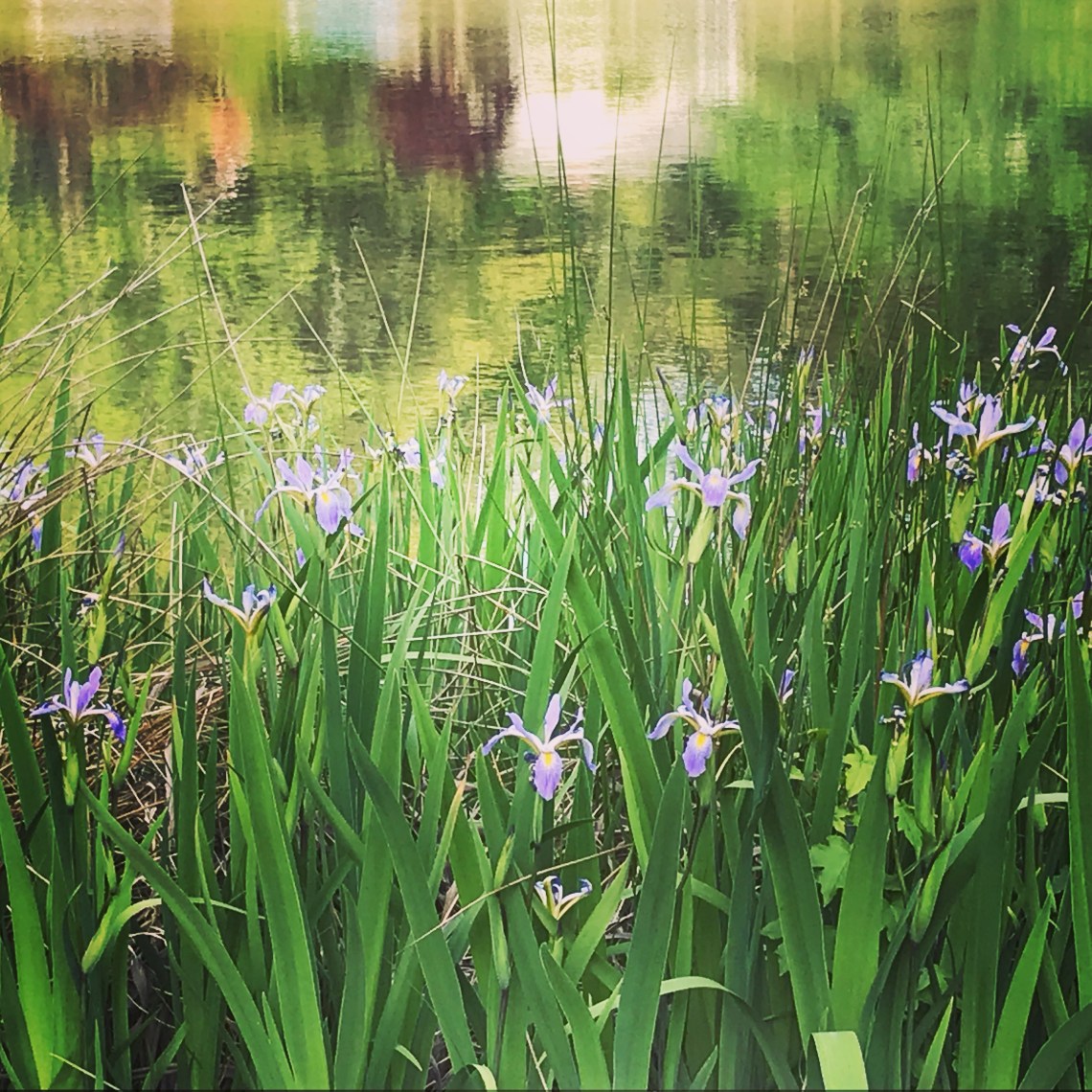
I started my Earth Day celebrations early last night with an 8.5 mile run through some of my favorite spots around Decatur. Captured a glimpse of the Earth’s beauty lakeside. I call this shot Monet-ish.

IMG-2902

High Pressure Performances

I’ve realized recently that I owe some of my former improv students an apology. For the past two years, I’ve taught an introductory long form improv class that ends with a grad show students perform for family and friends. Often my students would be nervous before these shows. I would downplay their fears telling them, “Don’t be nervous. Your friends and family are there to support you and cheer you on.” What I didn’t realize is this support itself is a source of anxiety.

I came to better understand the pressures my students face in the lead up to my recent performance at The Nestival in Columbus, Ohio. I’d applied to the festival with my improv partner, Chris, because performing in it would check off a lot of boxes: 1) it’d be our first Sarah & Chris show outside of Atlanta, 2) my family could drive up from Cincinnati to see it, 3) I could invite my Columbus based friends who haven’t seen me perform, and 4) I’d be able to check out the Nest Theatre, which I’d heard was a really cool improv theatre (it was!).

When we were accepted, I went into blind promo mode inviting my family and friends to the show. It was only after all these invites were out and Chris and I were prepping to travel that I realized what I’d done. Those same things that had attracted me to the festival were now huge sources of pressure on our 15 minute set: 1) Chris was traveling from Atlanta to be there, 2) all eight members of my Cincinnati based family were driving 100 miles to be there, 3) friends I hadn’t seen in five plus years were coming to the show and 4) we’d be performing in front of the improvisers who’d established this cool improv spot in Columbus as well as a lot of other awesome improvisers from around the country.

The pressure was on! Now, usually one of my favorite things about improv is that you can’t entirely prepare for it. As an anxious person, if I can prepare I will, and I often find myself dragged down emotionally trying to do everything possible in advance. In improv, you have to embrace the uncertainty of not knowing what you’re going to say or do on stage. Usually, this a relief, but in this situation it made me nervous.

I did what I could to ease my anxiety before the show. Chris and I practiced our format before we left town. I took a couple of workshops at the festival to get in the improv mindset. I made sure to get enough sleep and food before the show. I rehearsed what I was going to say in my introduction.

But backstage there was still uncertainty and the big looming questions. Would this set be funny? Would my friends feel embarrassed for me if it did not go well? Would my family take a poor performance as evidence of bad life choices on my part?

In improv, we often talk about following fear, but in this case, the fear followed me–right on stage to where I was presenting myself to an audience I imagined would vote on a referendum about my life right after the show. The likely verdict: “It’s a shame. She should have stuck it out in academia.”

The fear was there during my introduction. The fear was there at the top of the set when I worried I didn’t do enough to honor the audience suggestion in my opening line. The fear was there every time I went to initiate a new idea or “Yes, And” one of Chris’s ideas, encouraging me to play it safe instead.

The fear was there throughout, but there was a moment about 2-3 minutes into the set when I made my peace with the fear. This is something I’ve experienced in a few high pressure shows within the last year or so, and I think of it as my “f*#k it” moment. It’s not a magical moment where I hit the improv groove and escape my thoughts and just play–that would be lovely but it’s not what’s happening with my improv these days. Instead, it’s a moment where I accept that this is what this show is, however good or bad, and trust in my training to carry me through to the end.

I had my”f*#k it” moment and then made it through to the end. By audience accounts, it was a good show. I ultimately enjoyed myself and learned a lot about resisting the urge to play it safe in front of a high pressure audience. The experience has given me more empathy for my students. Going forward, I won’t downplay their grad show fears. I’ll give them the advice that I’ve given past students and that helped me on stage during my “f*#k it” moment–trust in your training.

I’ll also encourage my students to consider whose judgement they’re concerned about. For me, the day after the show I realized I didn’t need to worry about my family judging me. They weren’t driving 100 miles so they could tell me I’d made bad choices. They were there because they love and support me. I just wanted to feel worthy of that love and support.

If there was anyone ready to render judgement on the set, it was me. I wanted the set to prove to me that it makes sense that I’ve devoted the majority of my time the past five years to improv. That it makes sense as a career. That I’m worthy as a teacher and performer.

I’ll know this the next time I go into a high pressure improv show–that it’s my own expectations making me nervous. And hopefully this will help ease my anxiety. Because for me, having fun is one of the key ingredients to good improv, and it’s hard to have fun when you’re trying to justify the trajectory of your life with a fifteen minute set. That’s too much pressure to put on improv, which I’ll continue to love even if the performance doesn’t go well just like my family and friends will continue to love me even if I have a bad show.