A Meditation Milestone

I started meditating regularly in the fall of last year, and today I hit a pretty cool milestone–365 days in a row using the Headspace meditation app. Developing a meditation practice has been transformational for me, so I thought I’d outline my experience and the benefits I’ve seen for others who might be interested.

Before a friend recommended Headspace, I knew I wanted to try to meditation but found the process of developing a practice intimidating. I’d downloaded a few meditation tracks to my phone, but I used them infrequently and mainly when I was in crisis mode. With Headspace, the path to starting a practice was clear–the app features a 30 day ‘Basics’ program that offers a simple, straightforward approach to meditation helpfully illustrated with animations.

After 30 days, with the Basics program under my belt, I started exploring some of the other topic specific packages that Headspace offers (e.g., a 10 day program on Prioritization). I also started using one off meditation tracks available through the app designed to help you Unwind, Restore, Refresh, etc.

I used to listen to podcasts before falling asleep at night because I needed something to distract my mind. Now I use the sleep focused meditations Headspace offers in conjunction with sleep sounds available through the app. I do this nightly, and I also try to meditate in the morning when I wake up although I’m not as consistent with this as I would like to be.

In addition to using the Headspace app, I’ve read/listened to a few books this year that have been helpful in understanding the principles and benefits of meditation as well as theories on thoughts and emotions:

10% Happier: How I Tamed the Voice in My Head, Reduced Stress Without Losing My Edge, and Found Self-Help That Actually Works–A True Story by Dan Harris
Search Inside Yourself: The Unexpected Path to Achieving Success, Happiness (and World Peace) by Chade-Meng Tan
How Emotions Are Made: The Secret Life of the Brain by Lisa Feldman Barrett

The benefits I’ve enjoyed from meditating regularly include better sleep and improved focus throughout the day. What’s more, meditation has changed my relationship with obsessive thoughts. I’ve long suffered from these and used to feel that I was a prisoner to them and my emotions. Meditating regularly has made it easier to handle these thoughts when they arise and to process my emotions.

With the Headspace app, one question you’re asked to ponder early on is who will benefit from your practice. For me, meditation has made me a more attentive teacher, colleague, and friend. It’s made me a better spouse. And it’s made me a better person to myself.

On Striving to be an Object of Men’s Desire

“Hey!” a man shouted to me as he leaned out the passenger window of a white van.

I was standing on the sidewalk trying to take a picture of a mural on the other side of the road. His words took me by surprise, and I barely had the chance to say “hey” in response before the van drove along.

I’m usually friendly to men who call out to me on the street. I trace my accommodating behavior back to the first time this happened to me. I was probably about eight and walking down the street with a teenage neighbor. A man (possibly a friend of hers) driving by called out to us from his moving car. She responded by waving and yelling back to him.

“This is how it’s done,” she told me.

It’s cool to be called out on the street, I thought, and stored the idea away.

In the years since, while I’ve come to recognize this behavior as harassment, there’s still a part of me that enjoys it. Because it means a man desires me. And I want to be desired by men. Even though I’m married. Even though I’ve achieved a lot of other things in my life unrelated to men. Even though the men who desire me might not be men who I desire.

Around the same age I was first called to on the street, I occasionally played pool with a boy about my age who was my neighbor. I don’t remember much about playing pool, but I do remember the walls of the room where we played. They were lined with Playboy style posters of nearly naked women with huge breasts.

While it was an awkward setting for a kids pool match, I liked playing there and having access to this secret part of the adult world. I didn’t think I would ever be like the women I saw on the walls, but part of me wanted to be.

Over the years, I’ve defined myself in a series of identities–Christian, feminist, academic–that have challenged this want to be like the women on the walls, but I’ve never quite let go of my hope to be thin and voluptuous and beautiful–to be the object of men’s desires.

At 35, I’m in the best shape I’ve ever been. While I’ve pursued fitness for a host of reasons, one of the results of my considerable efforts is now I finally resemble the women I admired as a child. I watch myself change in the mirror at night and think, Yes, good job. Men will want to have sex with you.

It’s not a particularly useful thought at this stage in my life.

I’ve been with my husband for thirteen years. Sure, I want him to desire me, but it’s not just his approval I seek as I look in the mirror. It’s also the men who might call out to me on the street. And the men who might put posters of me on their walls. The men who might look me up on the Internet in this day and age.

As a child, I was taught to seek out this approval while playing pool and while walking down the street. I learned this in the same places that boys learned that they could call out to me when they wanted and put naked pictures of me up on their walls.

We’re experiencing a cultural shift now that’s challenging the traditional heteronormative gender dichotomy of women as objects of desire and men as handlers of these objects. Even as a Women’s Studies major, this shift has been hard for me to navigate. How exactly am I supposed to think about my sexuality if it’s not in relation to a man’s approval?

I’m not sure I have the answer, but I know where I’m starting. I’m pulling down the poster of myself I stare at every night (i.e. I’m covering up my mirror). At least for awhile. At least until I can look into it and not have my first thought be a man would definitely approve of this.

Tuesdays with Toes – Easy Ways to Name a Pet

My parents have a tradition of naming new pets after old pets they resemble. They’ve had two dogs named Piggly and three Siamese cats with variants of the name Clam: Pismo C. Clam, Clamboy, and George Clam Dickel. There was a Mama and a mini Mama–mom and daughter cat look-a-likes. There was only ever one Darcy, a beautiful brown Burmese cat I considered mine even though technically she was my parents’ cat.

When Darcy died, I thought I’d never love a cat again. Allergies prevented me from getting a cat of my own. But then came Toes.

Toes was a neighborhood cat who wandered into our yard. My first thought when I saw her was that she looked a lot like my parents’ cat Socks, who had recently passed away. But whereas Socks had a full set of white socks complementing his black coat, Toes had white socks on her back paws but on her front paws only her toes were white.

“Toes!” I called her in honor of Socks.

Like many well loved cats, Toes has an official name, Toes, and a nickname we often call her, Sweet Girl. This isn’t because she’s an overtly sweet cat. As you can see from the picture below, she has a rather gruff exterior. But if there’s one thing I’ve learned from Toes, it’s that you can be a nice cat and still advocate for what you want. Being sweet doesn’t mean being a pushover.

DSC03507.JPG

My Miscellaneous Life

Sometimes my interests and passions and hopes and dreams feel like a messy pile of papers or a long list of files downloaded from the Internet. They’re grouped together by virtue of being part of me. They’re mine. But I don’t feel like I can summarize them in a title that would characterize my life. Like someone dedicated to a profession might. Or someone who has earned honors in a particular area. Or someone who highly values their family role.

I’ve always wanted to be something, but I’ve had a lot of trouble pinning down what that something is. I think the closest I’ve gotten is artist which still seems quite general.

Part of the problem is that I love learning, and the desire to learn is always taking me off in new directions. Down new avenues toward something I might become and hopefully something I’m meant to be.

However the older I get the more uncomfortable I am with the idea that I’m meant to be something in particular. So I’m trying to make peace with the other option–a miscellaneous life characterized by varied interest that keep changing as I move, age, and meet new people.

In recognition of my miscellaneousness, I’ve introduced a new tab on the main menu of my webpage–a miscellaneous tab where I’m going to document things I’m interested in like visiting cemeteries around the world.

Keep an eye on the tab because I plan to add more soon. Gotta document those passions!

Whole30 – Take 3

The first time I tried to do Whole30, about a year ago, I failed because of lack of preparation. I didn’t understand how the program worked and found myself the first few days saying again and again, “Wait. You can’t eat that on Whole30?” Eventually, I threw in the towel unwilling to give up peanut butter and bacon (which generally contains added sugars).

I’ve been wanting to have another go at it, especially to test the effect of eliminating added sugars in my diet, but holidays, travel, etc. kept me from taking the plunge until about two weeks ago when I embarked on Whole30 again.

My second go around was a much better start. I bought the book. I prepped my meals. The first few days felt great. But then we were called out of town unexpectedly for a family emergency. I didn’t want to have to explain to my family members, who were dealing with enough stuff, why I wasn’t eating cheese or bread or beans or peanut butter or anything containing added sugars. So I dropped Whole30 and ate a cannoli parfait (which it turns out is the perfect way to eat a cannoli because it’s in a cup and there’s extra cannoli cream).

Ah, memories. Anyway, fast forward to today where I’m back home and now on Day 2 of Whole30. I really want to make it work this time. In the five days I was on the program before my trip, I could feel the benefit of regulating my sugar intake. My mood felt much more stable, and I stayed full longer. One of my major goals right now is gaining strength, and planning and prepping my meals is going to help me eat regularly and boost my protein intake–both necessary for achieving my goal.

One of the steps you’re supposed to take before starting Whole30 is announcing your intention publicly. I’m a little late to the game on this, but I’m about to go to a party with cookies and lemonade. So I wanted some accountability from the Internet. Thank you for being my witness.

Keep the Comedy, Ditch the Self Loathing

I was reading through old journals yesterday prepping for a reading I’m going to be doing this weekend when I stumbled across this from January 24, 2011: “I’m excited to become a comedian because it is one profession where self loathing is an asset.”

Reading this rattled me for a couple of reasons. First, the timing of the writing. In 2011, I remember jotting down jokes on the bus to and from work, but I wasn’t actively pursuing comedy. I wrote this two years before I signed up for my first improv class, four years before I started doing comedy full time. Given the time lag, it almost seems like a prophecy.

The other thing that rattled me is that I disagree with the statement I made about self-loathing being an asset. Having worked in comedy and the arts for a few years, I no longer subscribe to the tortured artist myth–that is believing artists are self sabotaging, drunk, crazy people who’ve made bad life choices and should just get a real job.

Comedians and artists are people who’ve chosen to take an honest look at their life and the world around them and to relay those findings to others. This honesty can look like self loathing because we’re admitting we’re not perfect. We’re admitting we have flaws. But admitting you have flaws doesn’t mean you loathe yourself. In fact, it can be the first step to loving yourself more.

For me, when I finally signed up for an improv class, it was because I was drowning in a sea of unhappiness and wanted to reconnect with things that made me happy when I was younger. Admitting I was unhappy and trying to take action on it was a huge step in healing.

I see this with students in my improv classes. Some come to improv when they’re looking to make a change in their life. Some take improv classes to reawaken their creativity. Some are looking to have fun and connect with others. Seeking out comedy tends to come from a place of self improvement rather than self sabotage.

To do comedy at its most basic level, you have to be willing to stand in front of a group of people and believe what you’re about to say is important enough for them to listen to. You can do this and loathe yourself, but it’s probably going to be more fun for you and for the audience if you care about yourself and are confident in what you’re doing. Which doesn’t mean covering up flaws–the truth is what’s funny after all.

If I had to rephrase my statement from 2011 to reflect my current reality, it would go something like this: “I’m excited to be a comedian because it is a profession that allows me to be honest, connect with people, and entertain them. Comedy makes me happy.”

Loneliness is wanting things from other people

Enlight100

I pass this pavilion often on my way home at night. It’s tucked away in a park so I only see it from a distance. It’s brightly lit against a backdrop of dark trees, and the turquoise blue restroom doors stand out against the white brick. It’s a beautiful structure in my opinion. And seeing it at night fills me with an incredible sense of loneliness.

For months I’ve been trying to unpack this mystery. Why does this building make me lonely?

Recently the answer hit me–loneliness is wanting things from other people.

The bright lights and lovely doors seem to cry out, “Come enjoy me.” But it’s night and it’s dark and I should probably be in bed already and it’s possibly illegal to be in the park that late so of course I’m not going to stop. My not stopping makes me feel lonely on behalf of the building.

The loneliest I’ve ever felt in a traditional absence of connections sense was in college. I was smart and funny, and it seemed absolutely no one wanted to date me. My friend group wasn’t cohesive, and my closest friends all had significant others which amplified my awareness of not having “my person” I could rely on for companionship.

In college, I often ate alone and spent evenings alone. I enjoy being alone now, but at that time, I was on a small campus where my being alone was observable to all of those around me. Their knowledge of my being alone made me even lonelier.

I don’t experience loneliness the same way now. I’ve been in a long term relationship for twelve years. I teach classes and am involved in lots of different communities in Atlanta: the improv scene, my acting studio, my gym. Still, I experience loneliness.

Loneliness for me now seems to strike when I want things–opportunities, recognition, praise–and this mainly occurs in my creative life. I want to be cast when I audition. I want my students to love their class. I want people to come to my shows. I want my creative partners to be as excited about our projects and committed to them as I am.

Sharing my art endeavors with others often feels like serving my heart on a platter. I picture my heart as peeled tangerine–one that’s rolled around the floor a few times and been picked at so the skin is broken and the flesh spills out.

“Here’s a damaged piece of fruit that’s my heart,” I want to tell people when I start doing something creatively with them. “Please don’t hurt it.”

I don’t say that. Instead I take the risk. My experience of loneliness may be wanting things from other people, but the converse also sounds lonely–not wanting anything from anyone. And I couldn’t accomplish much if I didn’t rely on people.

So I’ll continue to serve my damaged tangerine heart and pick it up when it’s occasionally dropped on the floor. Or I’ll be like the building shining brightly into the night beckoning people to come to it–standing solid and continuing to shine even as they drive by.


My new self-care mantra

I have a hard time cutting myself slack. I’ve definitely filled the role of my own worst critic, and I’ve treated myself more badly than I would treat any other person (although I wouldn’t treat anyone that badly so I’m not too much of a jerk to myself).

The notion of practicing self-care makes me queasy. Shouldn’t I be tough enough not to need self-care? Do I deserve self-care? Isn’t it selfish to practice self-care when most parts of my life are pretty easy?

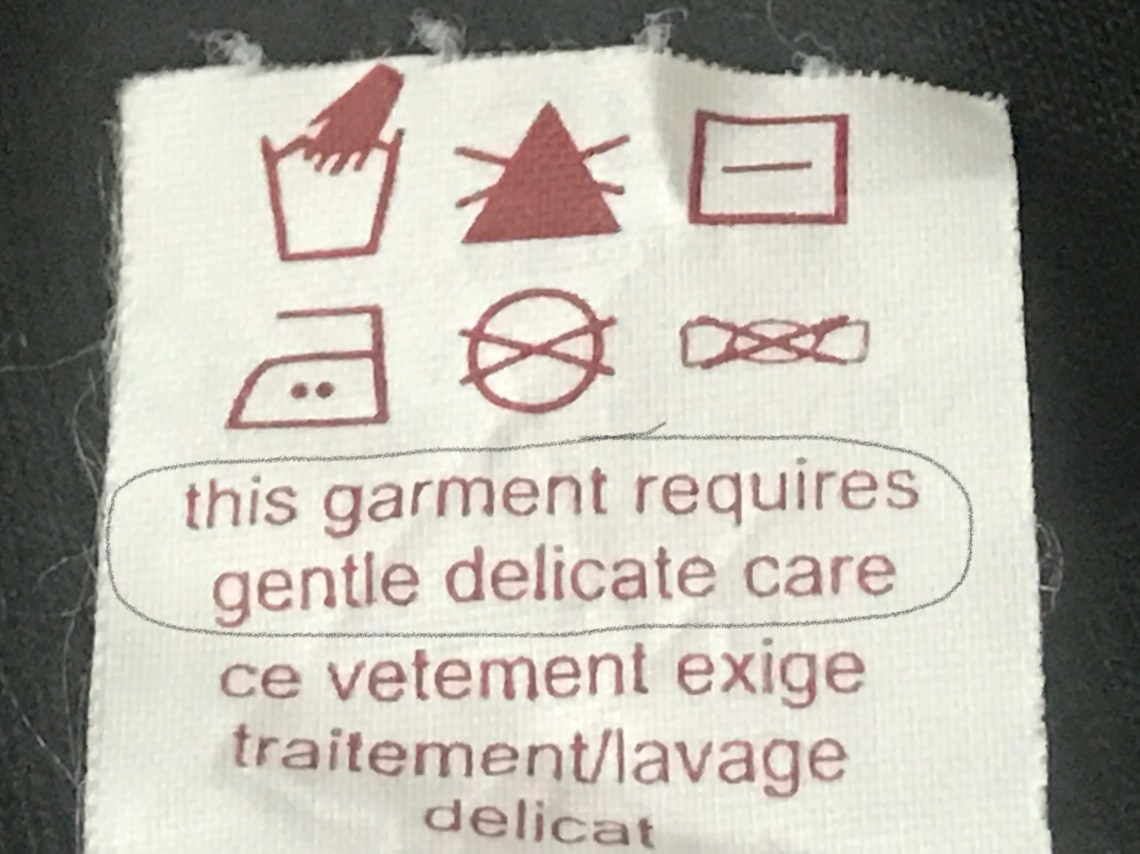
I’m trying to be better about practicing self-care and not interpreting it as a sign of weakness. I received a soft t-shirt as a gift recently from David. It has lovely washing directions that I’ve reworked into a mantra for myself.

“This garment requires gentle delicate care” becomes “this person requires gentle delicate care.”

I’m not “gentle” or “delicate” per se. But that’s the kind of care I want to give myself so that I can continue to be soft and strong.

IMG_3601

Why’d I wait so long?

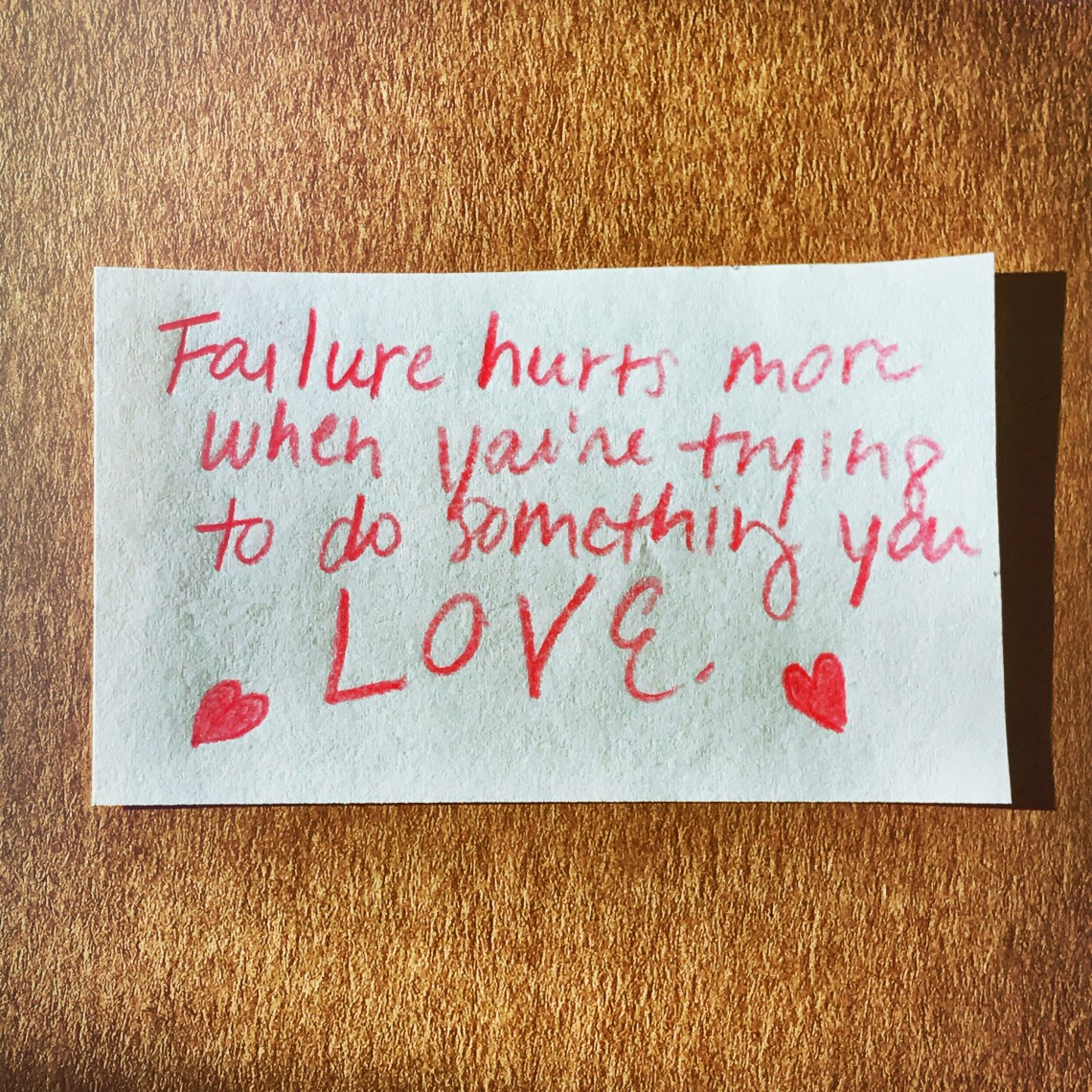
A question came up for me when I was writing the other day–why did it take so long for me to embrace my identity as an artist? I’m nearly 35 and still a bit terrified of labeling myself as such. There are a lot of factors at play, but I think a major one is fear of failure. When I was young, any whiff of potential failure sent me running in the other direction. This was especially true for the things that I loved most like writing, acting, and dancing. I still struggle with handling rejection, but I’m getting better at it. It still hurts, though, especially when it involves something I love.

Enlight104

You’ve got this, Sarah

But do I? Do I really?

I hit the gym early this morning–Monday 7am–because I have a lot to do this week. I have a lot I want to do in life.

I was tired and felt weary during the first portion of the workout–a strength training exercise. As I struggled to push press two kettlebells above my head, my trainer called from across the room, “You’ve got this, Sarah.”

I finished another rep and doubled over, struggling not to cry. Like a great improv scene, the moment had become about more than my ability to lift kettlebells.

There’s so much I want to do–write, act, improvise, teach, coach, lead, read, support other artists, spend time with friends and family, exercise, etc. There’s also some stuff I’m struggling to get through so I can be happier–behavior patterns I’m trying to modify.

Later in the workout, I was attempting to lift a single kettlebell from a kneeling position. My trainer was beside me.

“This feels impossible right now,” I told him.

“You can always scale back,” he responded. “This is about building strength.”

But can I? Can I really? I know I can’t have everything I want or do everything I want to do effectively, but I hate limiting possibilities for myself. Even though I know creativity thrives under constraints.

sport-2249311_1280